
How Conversational AI Is Redefining the Future of Local Commerce
How Conversational AI Is Redefining Local Commerce
Local commerce has always depended on personal relationships. Customers ask questions, seek recommendations, and expect businesses to understand their needs. Today, conversational AI is helping local companies deliver that personal touch at a larger scale.
From neighborhood retailers and restaurants to service providers and independent professionals, conversational AI is changing how businesses communicate, sell, and build customer loyalty.
What Is Conversational AI?
Conversational AI refers to technology that understands and responds to human language. It powers tools such as chatbots, virtual assistants, and automated messaging systems across websites, social media, and mobile apps.
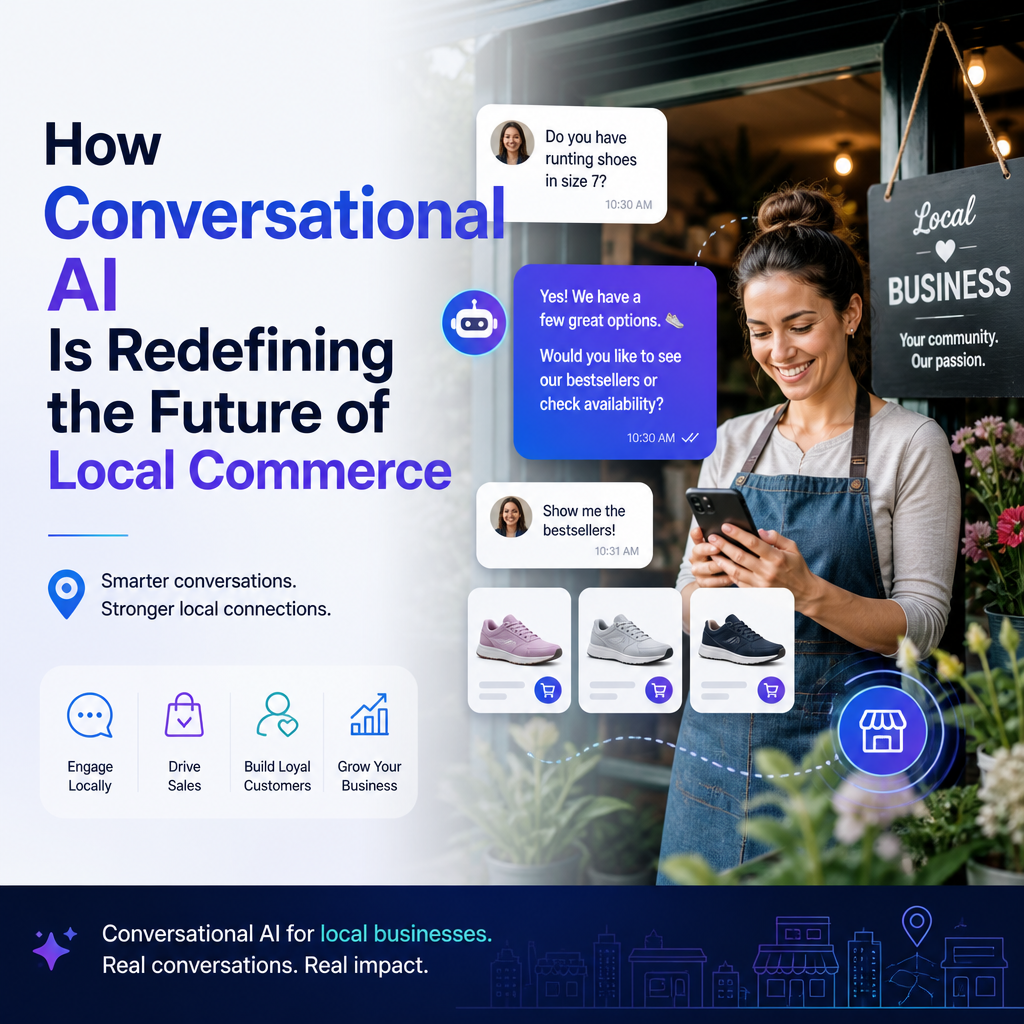
Unlike traditional automated systems that rely on rigid menus, conversational AI can interpret natural questions and provide relevant answers. A customer might ask about store hours, product availability, delivery times, or appointment options and receive an immediate response.
For local businesses, this creates a more convenient and responsive customer experience without requiring staff to monitor every message around the clock.
Making Local Businesses More Accessible
One of the biggest advantages of conversational AI is improved accessibility. Customers increasingly expect businesses to respond quickly, even outside normal operating hours.
A conversational AI assistant can help answer common questions about:
- Business hours and holiday schedules
- Products, prices, and availability
- Directions, parking, and delivery areas
- Return policies and payment methods
- Booking and appointment procedures
This instant access can make a meaningful difference. A customer deciding between several nearby businesses may choose the one that responds first and provides the clearest information.
Supporting Personalized Customer Experiences
Personalization is a major strength of local commerce. Independent businesses often know their customers by name and understand their preferences. Conversational AI can support this relationship by using customer data and previous interactions to create more relevant conversations.
For example, an AI assistant might recommend products based on a customer’s past purchases or remind a regular client about an upcoming appointment. A local restaurant could suggest menu items that match dietary preferences, while a home service company could guide visitors toward the right type of service.
These interactions feel more useful than generic advertising because they respond to individual needs.
Helping Small Teams Work More Efficiently
Small businesses often operate with limited staff and tight budgets. Repetitive customer questions can consume valuable time that could otherwise be spent on sales, operations, or in-person service.
Conversational AI can handle routine tasks such as:
- Answering frequently asked questions
- Collecting basic customer information
- Scheduling appointments
- Sending order or booking confirmations
- Routing complex issues to the right employee
This does not mean replacing human staff. Instead, it allows employees to focus on conversations that require empathy, judgment, and expertise.
Improving Local Discovery and Sales
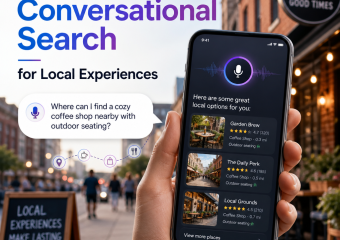
Conversational AI is also influencing how customers discover local businesses. A well-designed assistant can guide visitors through products and services, helping them move from curiosity to action.
For instance, a customer searching for a gift might describe the recipient, budget, and occasion. The assistant can then recommend suitable products available at a nearby store. A prospective client looking for a contractor might answer a few questions and receive a tailored service suggestion.
By reducing friction, conversational AI can increase inquiries, bookings, and purchases. It can also help businesses capture leads that might otherwise leave a website without taking action.
Building Trust Through Human Oversight
Despite its benefits, conversational AI works best when combined with human support. Customers can become frustrated when an automated system cannot understand an unusual request or resolve a sensitive problem.
Local businesses should create clear pathways to human assistance. Customers should be able to reach an employee when they need detailed advice, want to make a complaint, or are dealing with a complicated order.
Trust also depends on transparency. Businesses should explain when customers are interacting with AI and handle personal information responsibly. A helpful, honest system is more valuable than one that attempts to appear human at all costs.
The Future of Local Commerce
As conversational AI becomes more capable, it will likely become a standard part of local business operations. Voice assistants, multilingual support, personalized recommendations, and integration with inventory and booking systems will make these tools even more useful.
The businesses that benefit most will be those that use AI to strengthen relationships rather than replace them. Technology can provide speed and convenience, while people continue to deliver creativity, empathy, and local expertise.
Conversational AI is redefining local commerce by making businesses more responsive, efficient, and personalized. For local companies, the opportunity is not simply to automate communication, but to create better experiences that keep customers coming back.