

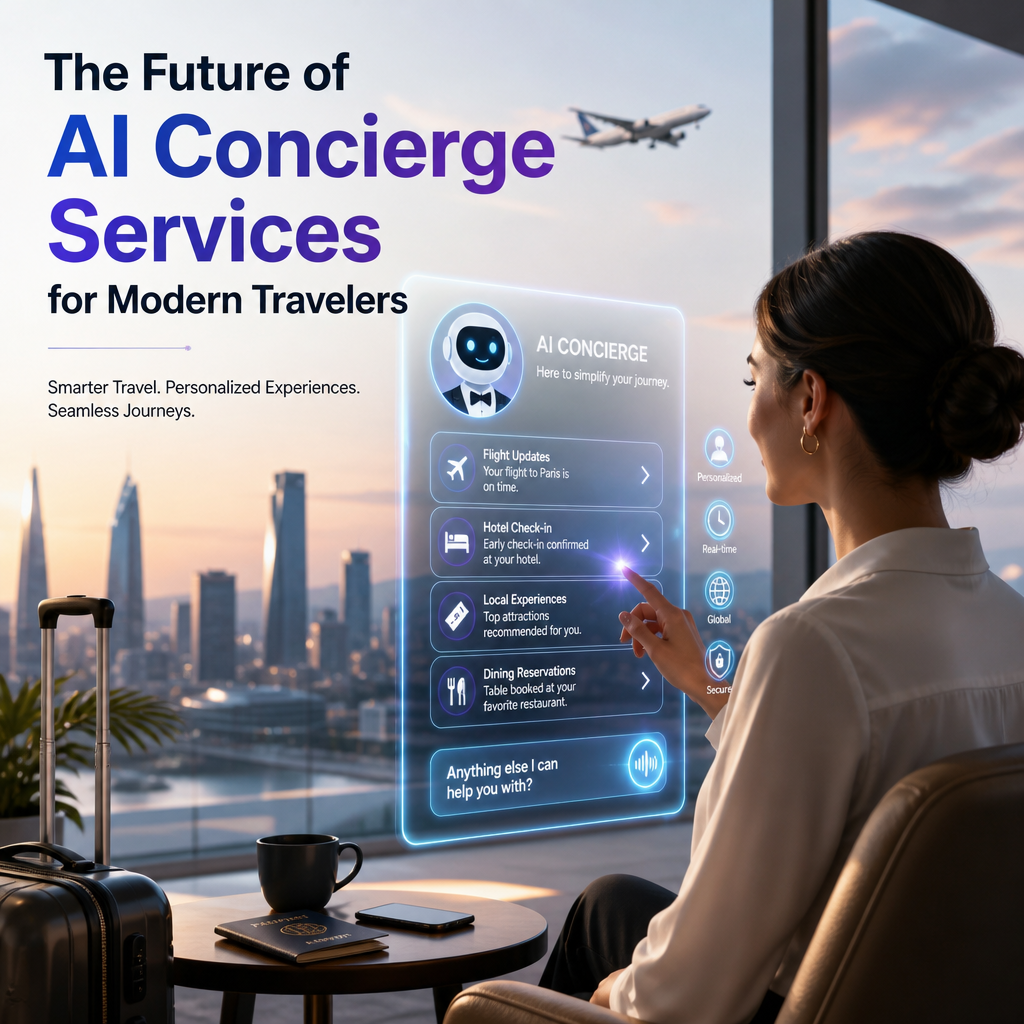
The Future of AI Concierge Services for Modern Travelers
The Future of AI Concierge Services for Travelers
Travel planning is entering a new era. Instead of searching through dozens of websites, comparing endless reviews, and juggling multiple booking apps, travelers can increasingly rely on artificial intelligence to organize their journeys. AI concierge services for travelers are becoming digital companions that offer personalized recommendations, real-time assistance, and support throughout every stage of a trip.
These services are changing the way people discover destinations, make decisions, and respond to unexpected travel challenges.
What Are AI Concierge Services?
An AI concierge is a digital assistant designed to help travelers with tasks traditionally handled by hotel concierges, travel agents, or customer service teams. Using natural language processing and machine learning, it can understand questions, preferences, and travel goals.
An AI concierge may help users:
- Build personalized itineraries
- Find flights, hotels, and restaurants
- Recommend attractions and activities
- Translate languages
- Provide directions and transportation information
- Track travel updates and delays
- Solve problems during a trip
Unlike static travel guides, AI-powered services can adapt their answers based on changing circumstances and individual preferences.
More Personalized Travel Planning
One of the greatest advantages of AI concierge technology is personalization. Travelers no longer need to settle for generic lists of popular attractions. An AI system can consider a person’s budget, interests, schedule, mobility needs, dietary preferences, and travel style.
For example, a traveler interested in local food and architecture could receive a walking itinerary featuring neighborhood markets, historic buildings, and independent restaurants. A family traveling with young children might receive recommendations for shorter activities, nearby parks, and family-friendly dining.
As AI systems learn from previous trips and user feedback, their suggestions can become more relevant over time. This creates a travel experience that feels less like using a search engine and more like consulting a knowledgeable personal advisor.
Real-Time Support on the Road
Travel rarely goes exactly as planned. Flights are delayed, reservations change, weather conditions shift, and transportation disruptions can create confusion. AI concierge services can help travelers respond quickly by monitoring real-time information and offering practical alternatives.
If a flight is canceled, an AI assistant might suggest replacement routes, notify a hotel about a late arrival, and recommend transportation from the new airport. If heavy rain affects an outdoor activity, it could propose indoor alternatives that fit the traveler’s location and schedule.
This instant support may be especially valuable in unfamiliar destinations, where language barriers and limited local knowledge can make unexpected problems more stressful.
Integration With Travel Services
The future of AI concierge services will depend heavily on integration. Rather than operating as separate chatbots, these tools are likely to connect with airlines, hotels, transportation networks, payment platforms, and smart devices.
A traveler could manage much of a trip from one conversational interface:
- Ask for a destination recommendation.
- Book transportation and accommodation.
- Receive digital check-in details.
- Get reminders about activities and reservations.
- Adjust plans through voice or text.
Integration with wearable devices could make assistance even more convenient. Travelers might receive walking directions, gate changes, translation help, or safety alerts directly through smart glasses, watches, or earbuds.
The Role of Human Expertise
Although AI can process information quickly, human expertise will remain important. Complex situations often require empathy, judgment, and cultural understanding that technology cannot fully replicate.
The most effective future services will likely combine artificial intelligence with human support. AI can handle routine questions and immediate recommendations, while human travel specialists can manage sensitive requests, complicated disruptions, or highly customized experiences.
This hybrid approach may deliver both efficiency and reassurance, particularly for luxury travelers, business travelers, and people visiting unfamiliar regions.
Privacy and Trust Challenges
The growth of AI concierge services also raises important concerns. To provide personalized assistance, these platforms may collect information about locations, preferences, spending habits, passports, and travel schedules.
Travelers will expect companies to protect this data through strong security, transparent privacy policies, and clear consent practices. AI recommendations must also be accurate, unbiased, and regularly updated. Incorrect information about transportation, safety, or local regulations could create serious problems.
Building trust will be essential. Travelers need to understand how recommendations are generated and have control over the information they share.
A More Seamless Travel Experience
The future of AI concierge services for travelers is likely to be more proactive, connected, and personalized. Instead of waiting for users to ask questions, AI assistants may anticipate needs by identifying potential delays, suggesting schedule improvements, or reminding travelers about important documents.
When carefully designed, these services can reduce travel stress while helping people make better use of their time. They will not replace the excitement of exploring new places or the value of human interaction. Instead, they can remove many logistical frustrations and make travel feel more seamless.
As technology advances, the best AI concierges will become trusted companions—quietly working in the background to help travelers plan confidently, adapt quickly, and enjoy more meaningful journeys.
