

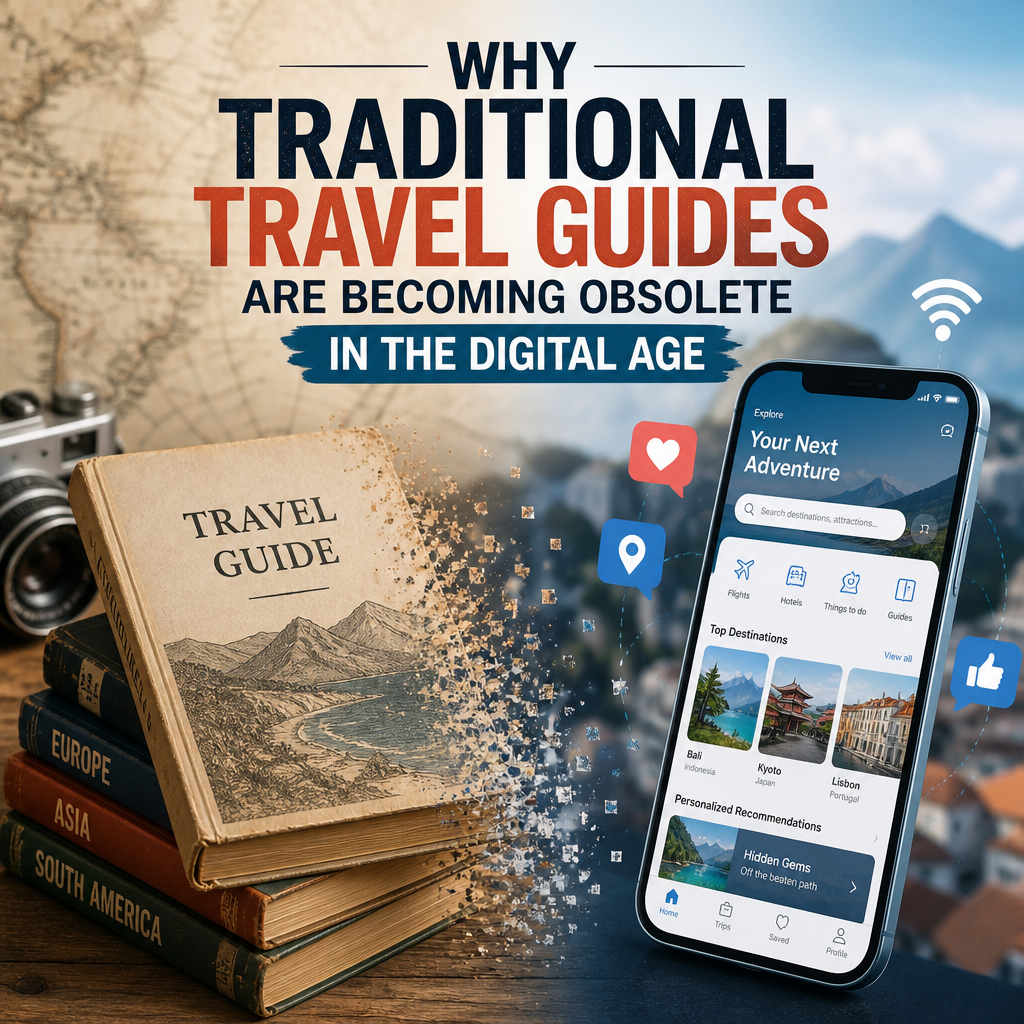
Why Traditional Travel Guides Are Becoming Obsolete in the Digital Age
Why Traditional Travel Guides Are Becoming Obsolete
For decades, printed travel guides were essential companions for tourists. They offered maps, hotel recommendations, restaurant reviews, cultural tips, and carefully planned itineraries. Travelers often packed guidebooks before leaving home and relied on them throughout their journeys.
Today, however, the way people discover and experience destinations has changed dramatically. Smartphones, real-time information, social media, and personalized travel platforms have made traditional travel guides less useful than they once were.
Information Changes Too Quickly
One of the biggest weaknesses of traditional travel guides is that they cannot keep up with rapidly changing information. A book may take months or even years to research, write, print, and distribute. By the time it reaches readers, some of its advice may already be outdated.
Restaurants close, hotels change ownership, public transportation schedules shift, and attractions adjust their opening hours. Even important details, such as visa requirements and entry regulations, can change with little warning.
Digital sources can update information almost instantly. Travelers can check current opening times, ticket availability, travel alerts, and local conditions in real time. This makes online resources far more practical for modern trips.
Travelers Want Personalized Recommendations
Traditional guidebooks usually offer advice designed for a broad audience. They may recommend the most popular museums, landmarks, restaurants, and neighborhoods, but they cannot fully understand each traveler’s individual interests.
Modern travelers increasingly expect personalized suggestions. A solo backpacker, a family with young children, and a luxury traveler may visit the same city but have completely different needs. Digital travel platforms can use preferences, search history, budget, location, and previous trips to provide recommendations that feel more relevant.
Instead of reading dozens of pages to find suitable activities, travelers can quickly search for exactly what they want, such as vegetarian restaurants nearby, quiet beaches, free attractions, or accessible cultural sites.
Real-Time Navigation Has Replaced Printed Maps
Printed maps were once among the most valuable features of a travel guide. They helped visitors navigate unfamiliar streets and plan routes between attractions. Today, navigation apps provide much more precise and flexible assistance.
With a smartphone, travelers can receive turn-by-turn directions, public transportation updates, walking routes, traffic information, and estimated arrival times. Many apps also work offline, reducing the need to carry a physical map.
Digital navigation can also respond to unexpected changes. If a road is closed or a train is delayed, the app can suggest an alternative route. A printed map cannot offer that level of support.
Social Media Shapes Travel Decisions
Many people now discover destinations through social media rather than guidebooks. Photos, videos, travel blogs, and short-form content allow users to see places before deciding whether to visit them.
Platforms such as Instagram, TikTok, YouTube, and Pinterest influence travel trends by showcasing hidden neighborhoods, local businesses, scenic locations, and unusual experiences. This content often feels more immediate and authentic than a standard guidebook recommendation.
Travelers can also read comments and watch recent videos to learn what a place is currently like. While social media has its own challenges, including over-tourism and misleading posts, it offers a constantly updated stream of information that traditional books cannot match.
Travelers Prefer Experiences Over Checklists
Traditional travel guides often encourage visitors to follow a list of major attractions. Although famous landmarks remain popular, many travelers now seek more personal and immersive experiences.
They may want to join a cooking class, explore a local market, attend a neighborhood event, or meet residents through a community-based activity. Digital platforms make it easier to find these opportunities and book them directly.
This shift reflects a broader change in travel culture. Visitors are increasingly interested in how people live, eat, work, and celebrate rather than simply collecting photographs of famous sights.
Environmental and Practical Concerns
Printed travel guides also create practical and environmental disadvantages. They add weight to luggage, occupy physical space, and require paper, ink, transportation, and storage. Once a book becomes outdated, it may be discarded even though much of its content remains useful.
Digital guides reduce the need for physical materials and allow travelers to carry a large amount of information on one device. Smartphones can store maps, reservations, translations, tickets, and travel documents in a compact format.
The Future of Travel Information
Traditional travel guides are not disappearing entirely. Some travelers still appreciate their detailed writing, curated recommendations, and freedom from screens. Printed books can also provide inspiration during the planning stage or serve as meaningful souvenirs.
However, their role is changing. Rather than being the primary source of travel information, guidebooks are becoming one resource among many. Real-time apps, local creators, review platforms, digital maps, and personalized recommendations now dominate the travel experience.
The modern traveler values information that is current, flexible, and tailored to personal needs. As technology continues to develop, traditional travel guides will likely become less central—not because they lack value, but because travelers now expect a faster, more interactive, and more personalized way to explore the world.
