

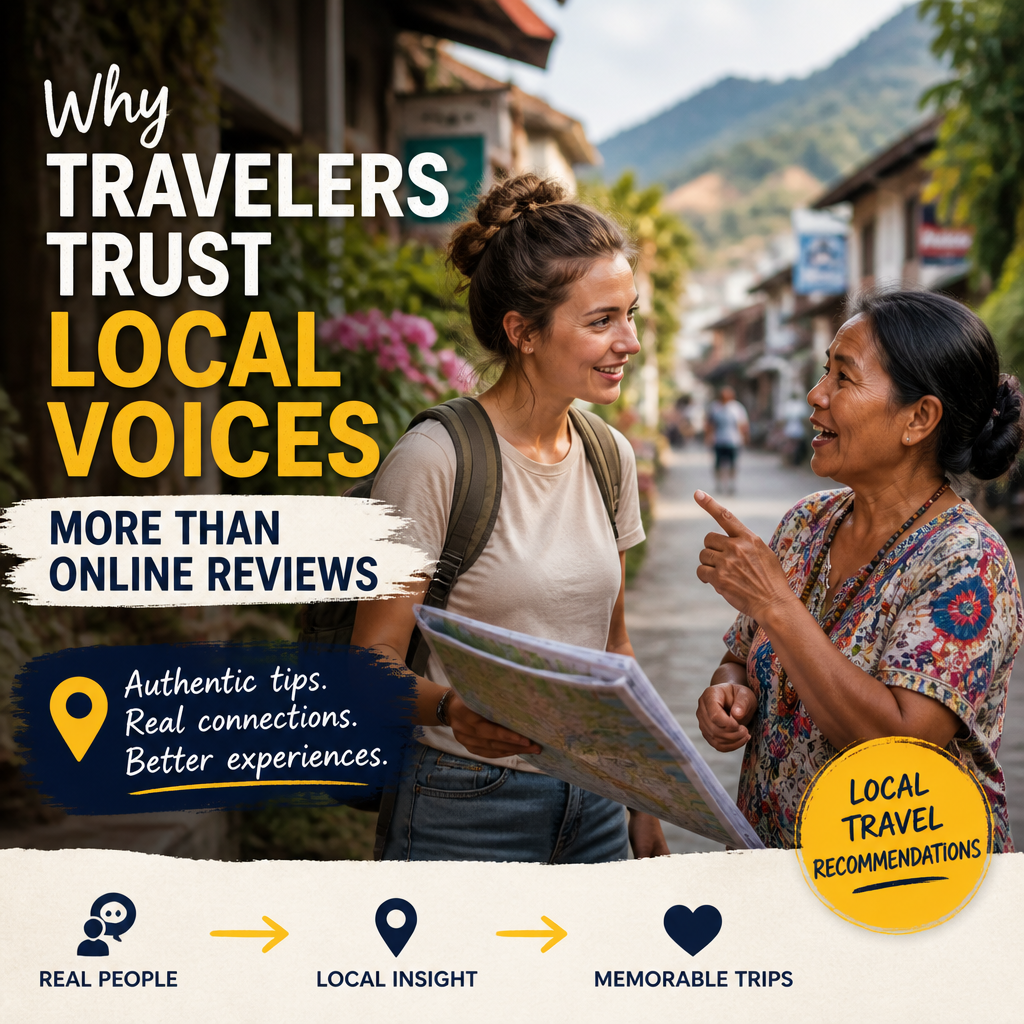
Why Travelers Trust Local Voices More Than Online Reviews
Why Travelers Trust Local Voices More Than Online Reviews
Travel planning has never been easier—or more confusing. With a few searches, travelers can find thousands of hotel ratings, restaurant reviews, destination guides, and social media recommendations. Yet despite this abundance of information, many people still prefer advice from someone who actually lives in the place they plan to visit.
Local voices offer something online reviews often cannot: context. They help travelers understand not only what is popular, but what is genuinely worthwhile.
Online Reviews Can Tell Only Part of the Story
Online reviews are useful for comparing prices, spotting recurring problems, and discovering popular attractions. However, they are rarely the complete picture.
A restaurant may receive negative feedback because service was slow on one unusually busy evening. A hotel may earn a poor rating because a guest expected luxury from a budget property. A popular attraction may receive hundreds of positive reviews simply because it is famous, not because it offers the most meaningful experience.
Reviews are also influenced by personal preferences. One traveler’s “too quiet” is another traveler’s perfect escape. One person’s “basic” hotel may be exactly right for someone who plans to spend most of the day exploring.
Local recommendations add the missing context. They explain who a place is best for, when to visit, and what to expect.
Local Knowledge Goes Beyond Tourist Highlights
Residents usually know that a destination is more than its best-known landmarks. They can point travelers toward neighborhood cafés, seasonal events, independent shops, scenic walking routes, and less crowded alternatives.
This insider perspective can transform a standard trip into a more personal experience. Instead of visiting only the attractions listed on major travel websites, visitors may discover:
- A family-run restaurant popular with residents
- A quiet viewpoint outside the main tourist area
- The best time to visit a busy market
- A local festival or cultural event
- A practical shortcut using public transportation
- A neighborhood with a distinct character
These details are often missing from general travel platforms because they are not easily measured through star ratings.
Trust Comes From Shared Experience
Travelers tend to trust local voices because the advice feels grounded in real life. A resident has likely visited the restaurant more than once, used the local transportation system, experienced different seasons, and learned which recommendations are genuinely reliable.
This repeated experience creates credibility. Locals can distinguish between a place that is briefly popular online and one that consistently delivers value.
Trust also grows when recommendations include honest limitations. A local might say, “The food is excellent, but arrive early because the restaurant fills quickly,” or “The view is beautiful, but the path is difficult after rain.” This balanced advice feels more authentic than a simple five-star rating.
Local Voices Reflect Current Conditions
Destinations change constantly. Businesses close, neighborhoods evolve, prices increase, and popular attractions become more crowded. Online reviews may remain visible long after the information is outdated.
Local residents are more likely to know what is happening now. They can identify newly opened businesses, temporary closures, construction zones, transportation changes, or events that have not yet appeared in major travel guides.
This is especially valuable for travelers visiting smaller towns or rapidly changing destinations. A local recommendation can prevent wasted time and help visitors adjust their plans based on current conditions.
Personal Recommendations Create Better Trips
The best travel advice is rarely universal. It depends on the traveler’s interests, budget, schedule, and comfort level.
A local can tailor suggestions more effectively than an algorithm. Families may receive advice about child-friendly activities, while solo travelers may learn about safe evening routes or welcoming social spaces. Food lovers can discover regional specialties, and outdoor enthusiasts can find trails suited to their experience.
This personal connection helps travelers make decisions with confidence. Instead of sorting through endless reviews, they receive practical guidance from someone who understands the destination and the type of experience they want.
Combining Reviews With Local Insight
Online reviews still have value. They can reveal patterns, provide basic information, and help travelers create an initial list of options. The strongest approach is to use reviews as a starting point and local voices as a trusted filter.
Before making a decision, travelers can:
- Check recent reviews for recurring concerns.
- Ask residents or local businesses for recommendations.
- Look for advice from people with similar interests.
- Confirm opening hours, prices, and transportation details.
- Remain open to alternatives beyond the most popular choices.
Travel is ultimately about experience, not just ratings. Local voices help travelers move beyond generic recommendations and connect with the character of a destination. Their knowledge adds context, honesty, and a sense of discovery—qualities that no review score can fully capture.
