

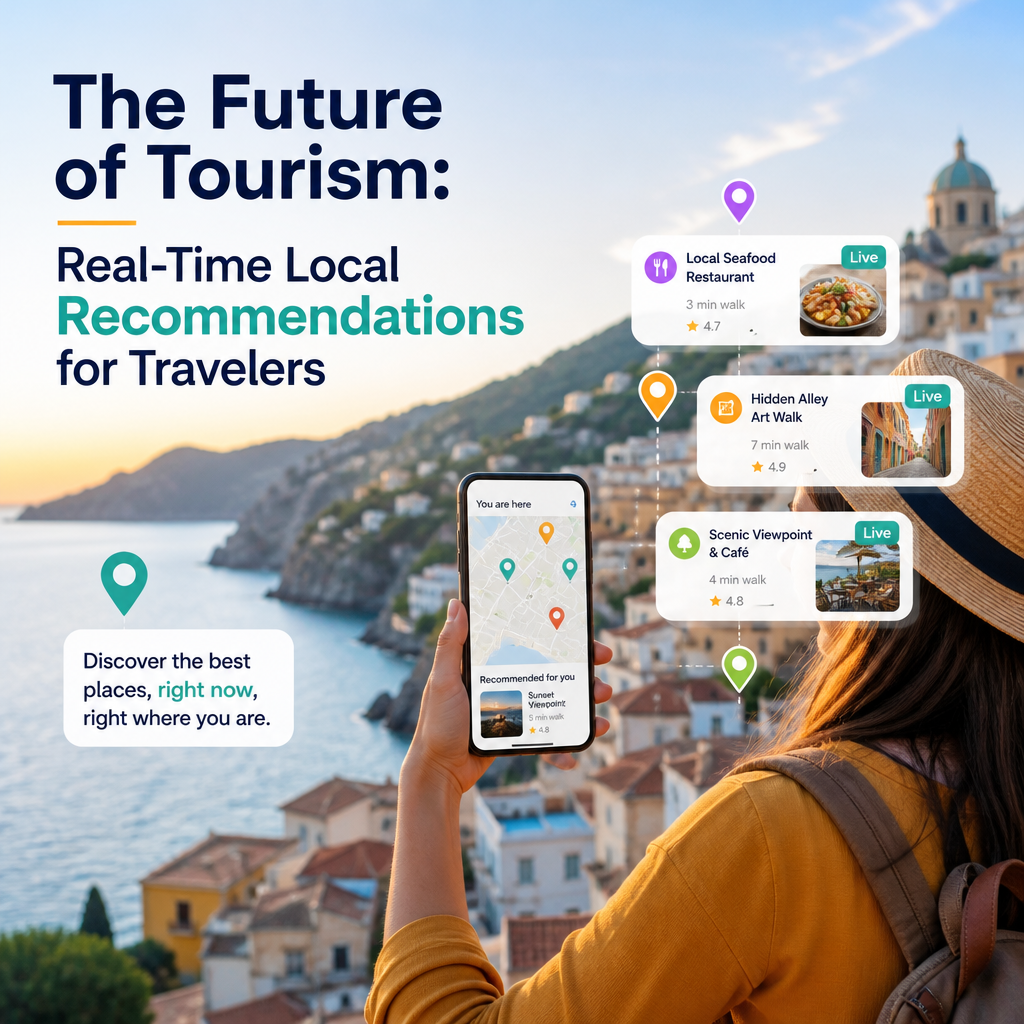
The Future of Tourism: Real-Time Local Recommendations for Travelers
The Future of Tourism: Real-Time Local Recommendations
Travel planning is changing rapidly. Instead of relying only on guidebooks, review sites, or carefully planned itineraries, travelers increasingly want advice that reflects what is happening around them right now. This shift is creating a new model for exploration: real-time local recommendations.
Whether it is finding a quiet café during a busy afternoon, discovering a neighborhood festival, or avoiding a crowded attraction, travelers can now receive suggestions based on current conditions. The result is a more flexible, personal, and responsive tourism experience.
Why Real-Time Recommendations Matter
Traditional travel advice is useful, but it often becomes outdated. A restaurant may close, a museum may reach capacity, or a popular viewpoint may become overcrowded. Static recommendations cannot always account for weather, traffic, local events, or changing visitor patterns.
Real-time recommendations use current information to help travelers make better decisions. They may consider:
- Location and distance
- Opening hours and availability
- Weather conditions
- Crowd levels
- Local events
- Personal interests
- Reviews and recent activity
This allows tourists to move beyond fixed itineraries and respond to the destination as it changes throughout the day.
A More Personalized Travel Experience
One of the most important advantages of real-time local recommendations is personalization. Travelers no longer have to follow the same list of attractions as everyone else. Technology can suggest experiences that match individual preferences, whether those involve art, food, history, nature, shopping, or nightlife.
For example, a traveler interested in local cuisine might receive a suggestion for a neighborhood food market that is currently open and less crowded than the city’s famous restaurant district. Someone seeking relaxation could be directed to a nearby park with favorable weather and plenty of space.
This level of personalization can make travel feel more natural. Instead of spending hours researching what to do next, visitors can receive useful ideas at the moment they need them.
Supporting Local Businesses
Real-time discovery can also benefit small and independent businesses. Tourists often concentrate around well-known attractions and international brands, while local shops, family-owned restaurants, galleries, and independent guides remain overlooked.
Location-based recommendations can help distribute visitor spending more widely. A traveler leaving a busy landmark might be guided toward a nearby artisan studio, locally owned café, or community event. This creates opportunities for businesses that may not have large marketing budgets.
For destinations, supporting local enterprises can strengthen the tourism economy and encourage visitors to explore beyond crowded central areas.
Reducing Overcrowding
Overtourism is a growing concern in many popular destinations. Famous landmarks can become uncomfortable for visitors and place pressure on local communities, transportation systems, and historic sites.
Real-time local recommendations may help manage this problem by directing travelers toward alternative locations. If a major attraction is unusually crowded, a digital travel assistant could suggest a less busy site with similar cultural or scenic value.
This does not eliminate tourism pressure, but it can distribute visitors more evenly. In the long term, such systems may help destinations protect important places while still offering visitors meaningful experiences.
The Role of Artificial Intelligence
Artificial intelligence is likely to play a central role in the future of real-time tourism. AI systems can analyze large amounts of information, identify patterns, and generate recommendations based on a traveler’s behavior and preferences.
A digital assistant might understand that a traveler prefers walking over public transportation, enjoys quiet places, and has two hours available before dinner. It could then create a practical route involving a nearby gallery, a scenic street, and a highly rated local bakery.
However, effective recommendations require more than data. They must also respect privacy, avoid bias, and present reliable information. Travelers should understand why a suggestion is being made and have control over the personal information used to create it.
Challenges to Consider
Although the technology is promising, real-time tourism presents several challenges:
- Inaccurate or outdated information can lead to poor experiences.
- Excessive personalization may limit spontaneous discovery.
- Privacy concerns may arise from constant location tracking.
- Popular recommendations could create new forms of overcrowding.
- Smaller businesses may be excluded if platforms favor paid promotions.
Trust will be essential. Tourism platforms must clearly distinguish between genuine recommendations and advertising while ensuring that local communities benefit from increased visitor activity.
A More Flexible Future for Travelers
The future of tourism will likely combine human curiosity with intelligent digital guidance. Travelers may still plan major parts of a trip in advance, but they will increasingly adapt their schedules based on live information.
Real-time local recommendations can make travel more convenient, personal, and sustainable. They can help visitors discover places beyond the standard tourist route, support local businesses, and respond to the constantly changing conditions of a destination.
The most successful systems will not simply tell travelers where to go. They will help them understand the places they visit and make thoughtful choices while they are there.
