

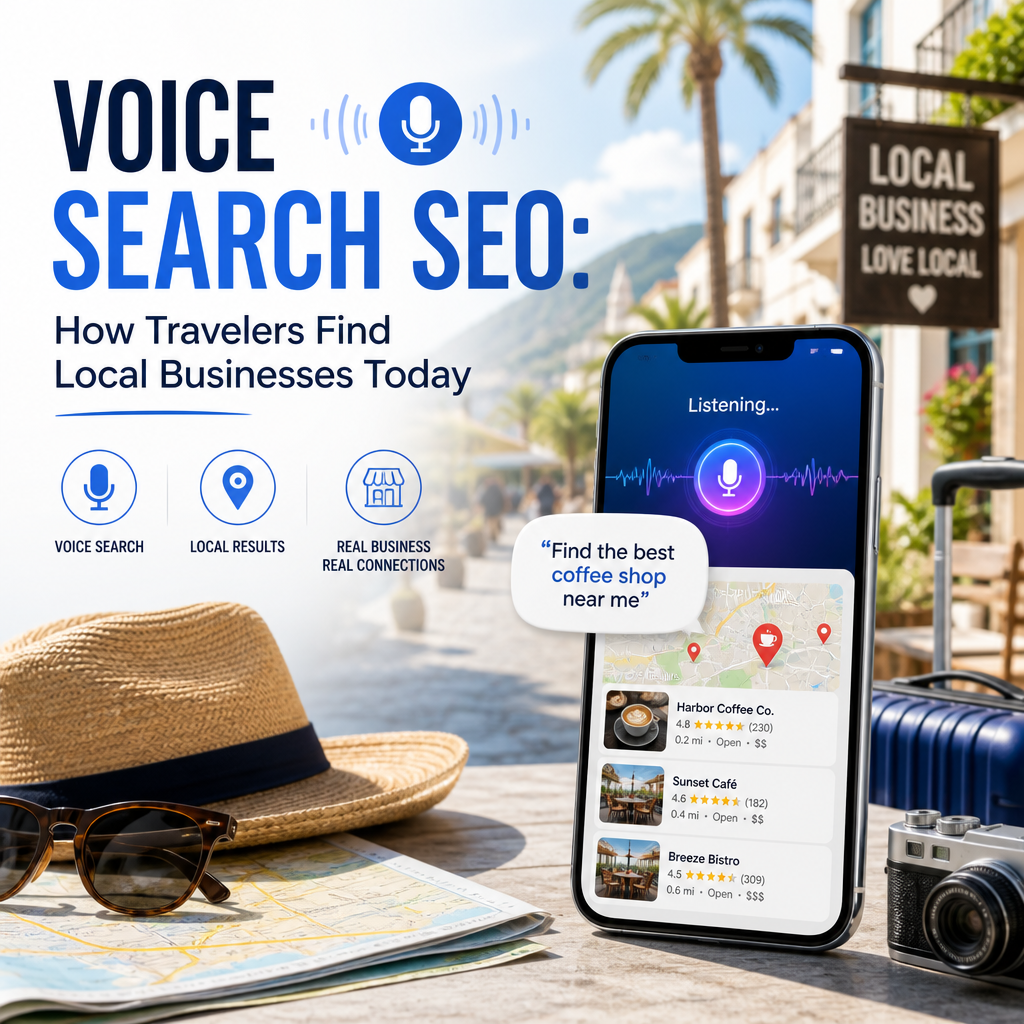
Voice Search SEO: How Travelers Find Local Businesses Today
Voice Search SEO: How Travelers Are Finding Local Businesses Today
Travel planning has changed dramatically. Instead of typing detailed queries into a search engine, many travelers now ask their phones, smart speakers, and car assistants for quick recommendations. Questions such as “Where can I find a coffee shop near me?” or “What are the best restaurants open now?” are becoming a natural part of the travel experience.
For local businesses, this shift makes voice search SEO an important part of attracting visitors. Businesses that understand how travelers speak, search, and make decisions can improve their visibility at exactly the moment customers are ready to take action.
Why Voice Search Matters for Travelers
Travelers often search while walking through an unfamiliar neighborhood, driving to a destination, or managing a busy itinerary. Voice search is convenient because it requires less effort than typing on a small screen.
Many travel-related searches are also highly local and time-sensitive. Visitors may need:
- Directions to a nearby attraction
- Restaurants open late
- Hotels with available rooms
- Pharmacies or convenience stores
- Shops near a landmark
- Activities suitable for families
- Services in a specific neighborhood
These searches often have strong purchasing intent. Someone asking for “the best sushi restaurant near me” may be ready to visit within minutes.
How Voice Search Differs From Traditional Search
Voice searches tend to be longer and more conversational than typed searches. A traveler might type “best museums Paris,” but ask, “What are the best museums to visit in Paris today?”
This difference affects the way businesses create content. Voice search SEO should focus on natural language, complete questions, and phrases that reflect how people speak.
Common voice search patterns include:
- “Where is the nearest…?”
- “What time does… open?”
- “How far is… from here?”
- “What is the best… near me?”
- “Are there any… open now?”
- “How do I get to…?”
Businesses should consider these conversational phrases when writing website content, business descriptions, and frequently asked questions.
Optimize Your Google Business Profile
A complete and accurate Google Business Profile is essential for local visibility. Search assistants often use business listings to answer location-based questions, so incomplete information can limit a company’s chances of appearing.
Make sure your profile includes:
- Correct business name, address, and phone number
- Updated opening hours and holiday hours
- Accurate category selections
- Current photos
- Website and booking links
- Services, amenities, and accessibility details
- Responses to customer reviews
Travelers frequently search for practical information, such as whether a business accepts reservations, offers outdoor seating, or provides services in another language. Including these details can help both search engines and customers.
Create Content That Answers Traveler Questions
A helpful FAQ section can improve the chances of appearing for conversational searches. Focus on questions visitors are likely to ask before or during a trip.
For example, a hotel might answer:
- How far is the hotel from the airport?
- Does the hotel offer luggage storage?
- What attractions are within walking distance?
- Is breakfast available early in the morning?
- Does the property offer parking?
A restaurant could address questions about dietary options, reservations, children’s menus, public transportation, and opening hours.
Use clear, direct answers. Voice assistants often favor concise information that can be read aloud easily.
Focus on Local and “Near Me” Intent
Travelers rarely search for a business in isolation. They usually connect it to a place, attraction, or immediate need. Local businesses should include relevant geographic terms throughout their website without forcing them unnaturally.
Mention:
- The city or town
- Neighborhood names
- Nearby attractions
- Airports, stations, and landmarks
- Popular districts or travel routes
For example, a tour company could create content around “walking tours near the historic city center” rather than relying only on a general phrase such as “city tours.”
Location-specific pages can also help businesses reach visitors planning activities in different parts of a destination.
Improve Mobile Performance
Most voice searches take place on mobile devices, making website performance especially important. A slow or difficult-to-use website can cause travelers to leave before making a reservation or calling the business.
Prioritize:
- Fast loading times
- Mobile-friendly layouts
- Click-to-call phone numbers
- Easy-to-find directions
- Simple booking forms
- Accessible menus and pricing
- Secure, readable pages
Structured data can also help search engines understand information such as business hours, addresses, reviews, events, and services.
Build Trust Through Reviews
Reviews strongly influence travelers, particularly those unfamiliar with a destination. Positive reviews can increase credibility, while detailed review responses may provide additional context about the business.
Encourage genuine customers to mention useful details, such as:
- Location convenience
- Service quality
- Wait times
- Accessibility
- Family-friendly features
- Nearby attractions
- Specific products or experiences
Businesses should respond professionally to both positive and negative feedback. Consistent engagement signals that the company is active and attentive to customers.
Make Voice Search Part of Your Local Strategy
Voice search SEO is ultimately about being useful in real-world moments. Travelers want fast, accurate answers from businesses that are nearby, open, and relevant to their needs.
By maintaining accurate local listings, answering conversational questions, improving mobile performance, and building a strong review presence, businesses can become more visible to travelers using voice technology. The goal is not simply to rank for more searches—it is to provide the information that helps a visitor choose your business with confidence.
