
What Is Voice-First Travel and Why It’s the Future of Local Discovery
What Is Voice-First Travel and Why It Is the Future of Local Discovery
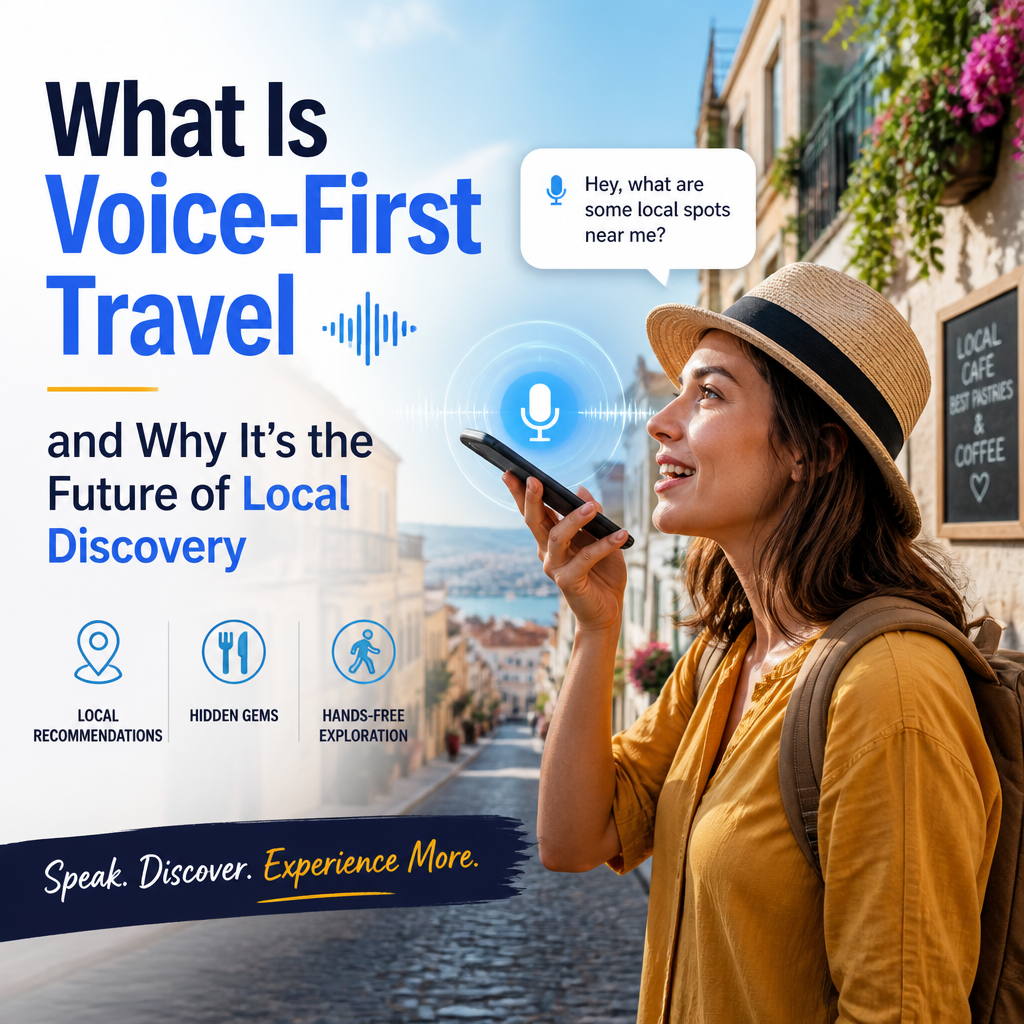
Travel planning is becoming less dependent on screens and search boxes. Instead, travelers are increasingly using spoken commands to find restaurants, attractions, transportation, and experiences. This shift is known as voice-first travel—an approach to exploring destinations through voice assistants, smart devices, mobile apps, and in-car systems.
Rather than scrolling through dozens of listings, travelers can simply ask, “Where can I find authentic local food nearby?” or “What is the best museum to visit this afternoon?” Voice technology turns those questions into quick, conversational recommendations.
Understanding Voice-First Travel
Voice-first travel refers to using spoken language as the primary way to discover and interact with travel information. It can support nearly every stage of a journey, from inspiration and planning to navigation and on-the-ground exploration.
Voice tools may help travelers:
- Find nearby attractions and restaurants
- Get directions and transportation updates
- Learn historical facts about landmarks
- Translate signs or spoken conversations
- Discover events happening locally
- Make reservations or purchase tickets
- Receive personalized recommendations
This technology is powered by artificial intelligence, natural language processing, location data, and increasingly sophisticated travel platforms. Unlike traditional search, voice-first tools are designed to understand intent, context, and conversational questions.
Why Local Discovery Is Changing
Local discovery has traditionally relied on maps, review websites, social media, and travel guides. These resources remain useful, but they can also overwhelm users with too many choices. Voice interfaces offer a faster and more natural alternative.
A traveler does not need to know the exact name of a place to find it. They can describe what they want using everyday language, such as:
“Find a quiet coffee shop with outdoor seating near the old town.”
The system can then combine location, opening hours, user preferences, reviews, and current conditions to deliver a relevant answer. This makes discovering a destination feel less like researching and more like having a conversation with a knowledgeable local.
More Personalized Travel Experiences
One of the biggest advantages of voice-first travel is personalization. Voice assistants can learn from previous interactions and adapt recommendations to an individual’s needs.
For example, a family might ask for child-friendly activities within walking distance. A solo traveler could request a safe evening itinerary. A food enthusiast might look for independent restaurants serving regional specialties.
Personalization may be based on:
- Budget
- Dietary preferences
- Mobility requirements
- Travel history
- Preferred activity level
- Available time
- Weather and local events
As these systems become more connected, they will be able to create recommendations that reflect not only where travelers are, but also what they are likely to enjoy.
Making Travel More Accessible
Voice-first travel can also make local exploration more inclusive. Travelers with visual impairments, reading difficulties, limited mobility, or unfamiliarity with a written language may find spoken interfaces easier to use.
Audio guidance can describe surroundings, provide step-by-step directions, or explain a landmark without requiring the traveler to look at a screen. Translation features can also help visitors communicate with local businesses and understand cultural information.
For travelers who are driving, cycling, or carrying luggage, voice interaction offers a safer and more convenient alternative to typing or reading while moving.
Benefits for Local Businesses
The growth of voice-first travel creates new opportunities for small businesses. Restaurants, tour operators, galleries, shops, and independent attractions can become more visible when voice assistants recommend them for specific questions.
However, appearing in voice results requires more than simply having a website. Businesses should provide accurate, structured, and conversational information, including:
- Current opening hours
- Clear location details
- Updated contact information
- Frequently asked questions
- Accessible descriptions of products or services
- Natural phrases customers may use when searching
A business that clearly answers common questions may be more likely to appear when a traveler makes a spoken request.
The Future of Voice-First Travel
Voice-first travel will likely become more contextual and proactive. Instead of waiting for a question, travel assistants may anticipate needs based on location, schedule, weather, and preferences.
A voice assistant could suggest an indoor attraction when rain is approaching, recommend a nearby restaurant after a delayed flight, or alert travelers to a local festival as they enter a new neighborhood.
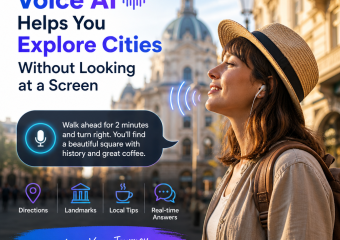
The future may also combine voice with augmented reality, wearable devices, and real-time translation. Travelers could receive spoken guidance through earbuds while exploring, leaving their phones in their pockets and their attention focused on the destination.
A More Natural Way to Explore
Voice-first travel is changing local discovery by making travel technology faster, more conversational, and more personal. It reduces the friction of finding useful information and helps visitors discover experiences that may not appear in traditional guidebooks.
As artificial intelligence improves, asking a question may become the simplest way to navigate an unfamiliar place. For travelers and local businesses alike, voice is no longer just a convenience—it is becoming an important gateway to the world around us.