

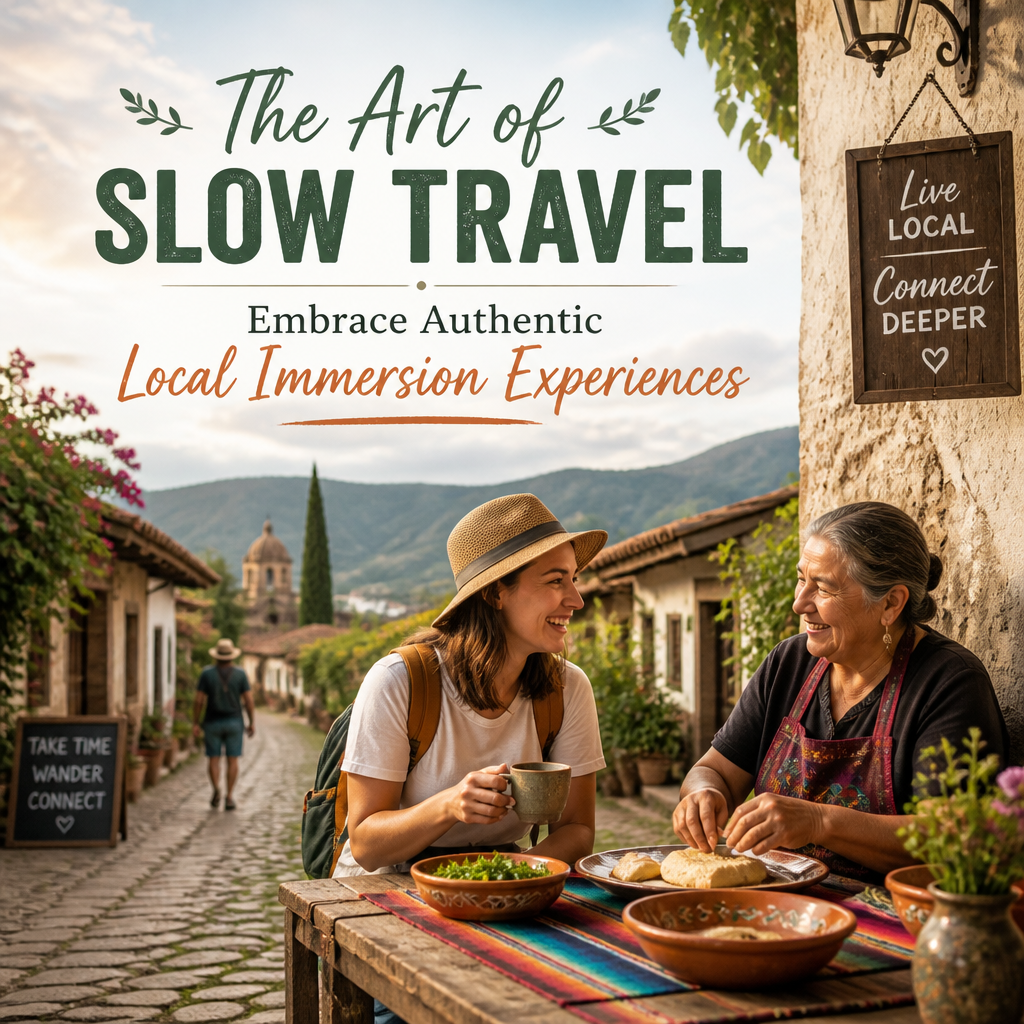
The Art of Slow Travel: Embrace Authentic Local Immersion Experiences
The Art of Slow Travel and Local Immersion
Travel does not always need to be a race from one landmark to the next. In a world of packed itineraries, fast transportation, and endless photo opportunities, slow travel offers a more thoughtful alternative. It invites you to stay longer, notice more, and connect with the places and people you visit.
The art of slow travel and local immersion is less about checking destinations off a list and more about experiencing daily life at a meaningful pace.
What Is Slow Travel?
Slow travel is an approach to exploring that values quality over quantity. Rather than visiting several cities in a few days, slow travelers may choose one neighborhood, town, or region and spend enough time there to understand its character.
This might mean:
- Taking a regional train instead of flying
- Staying in a family-run guesthouse
- Shopping at local markets
- Walking without a strict schedule
- Learning a few phrases in the local language
- Returning to the same café or restaurant throughout a stay
Slow travel does not require a long vacation. Even a few intentional days can feel richer when you leave space for discovery.
Why Local Immersion Matters
Local immersion transforms travel from sightseeing into participation. Instead of observing a destination only through famous attractions, you begin to understand how people live, work, eat, and spend their time.
A conversation with a shopkeeper may reveal more about a neighborhood than a guidebook. A home-cooked meal can introduce traditions that no museum exhibit can fully explain. Sitting in a public square can offer a glimpse into the rhythm of local life.
These ordinary experiences often become the most memorable parts of a journey because they feel personal and unscripted.
Building Genuine Connections
Meaningful connections begin with curiosity and respect. Ask questions, listen carefully, and avoid assuming that your own customs are universal. Locals are more likely to engage when visitors show genuine interest rather than treating them as sources of entertainment or information.
Consider joining a small community activity, such as:
- A cooking class led by a local resident
- A walking tour focused on neighborhood history
- A regional craft workshop
- A language exchange
- A volunteer project organized responsibly within the community
The goal is not to collect interactions but to create moments of mutual understanding.
Choosing Depth Over Distance
One of the simplest ways to practice slow travel is to reduce the number of destinations on your itinerary. Instead of trying to see an entire country, select one area and explore it deeply.
A longer stay allows you to discover more than major attractions. You may find a quiet park, a family-owned bakery, a neighborhood festival, or a scenic route that does not appear in standard travel guides.
Staying longer also reduces the stress associated with constant packing, navigation, and transportation. You have time to rest, adjust to the local rhythm, and make decisions based on what genuinely interests you.
Traveling More Sustainably
Slow travel can also support more responsible tourism. Choosing trains, buses, bicycles, or walking over frequent short flights can reduce the environmental impact of a trip. Staying in locally owned accommodations and eating at independent restaurants helps keep money within the community.
Sustainable choices include:
- Carrying a reusable water bottle and shopping bag
- Avoiding overcrowded attractions during peak hours
- Respecting local rules and protected areas
- Buying thoughtfully made products rather than mass-produced souvenirs
- Supporting businesses that employ local residents fairly
Sustainability is not about traveling perfectly. It is about making more conscious decisions whenever practical.
Creating Space for Serendipity
A carefully planned itinerary has its advantages, but an overfilled schedule can leave no room for unexpected experiences. Slow travel depends on flexibility.
Leave an afternoon open. Follow the sound of music from a nearby street. Accept a recommendation from someone you meet. Take a longer route home simply because it looks interesting.
These unplanned moments often become the stories you remember long after returning home. They also encourage you to pay attention to your surroundings rather than constantly consulting a schedule.
A More Meaningful Way to Travel
The art of slow travel and local immersion is ultimately about presence. It asks you to exchange urgency for curiosity and consumption for connection. You may see fewer attractions, but you are likely to remember more details: the smell of bread from a morning bakery, the sound of a local language in a crowded market, or the warmth of a conversation that lasted longer than expected.
Travel becomes richer when you allow a destination to unfold gradually. By slowing down, staying curious, and respecting local life, you return home not only with photographs, but with a deeper understanding of the world and your place within it.
