

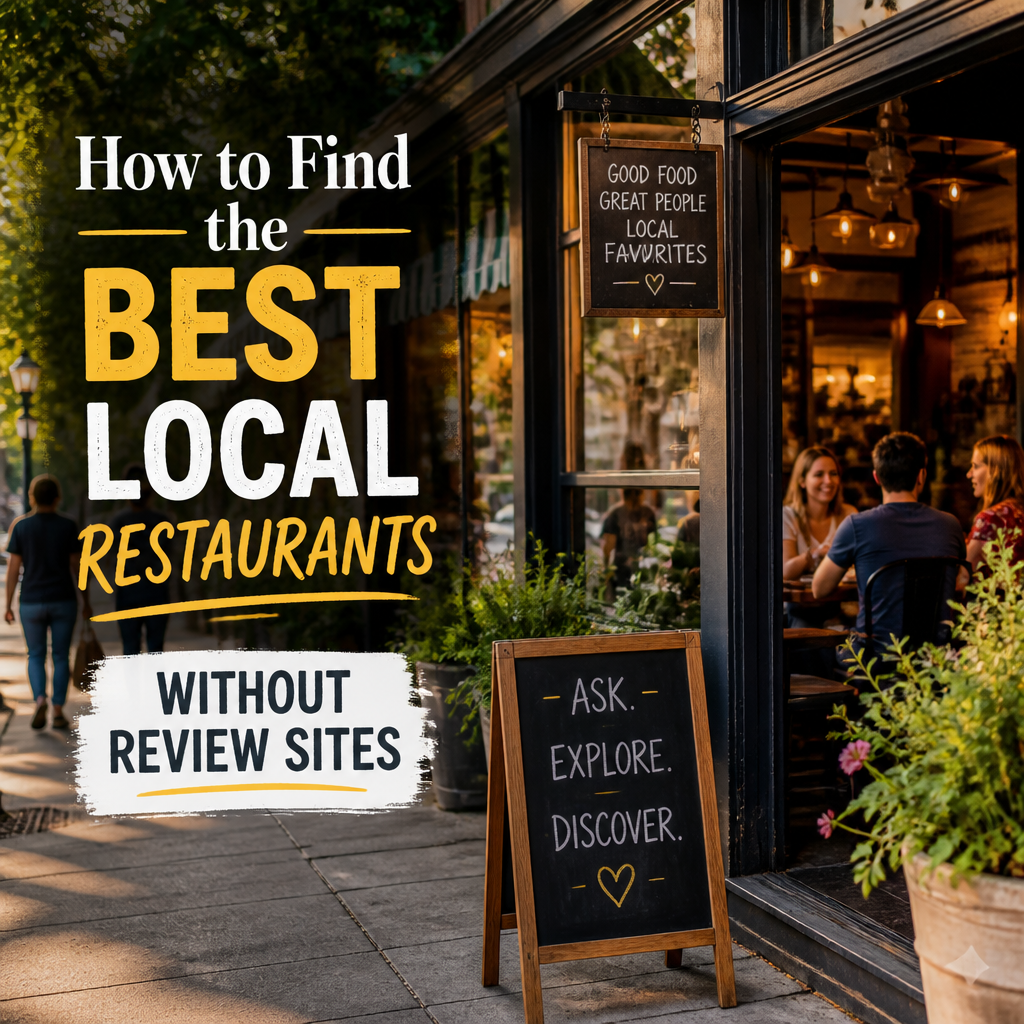
How to Find the Best Local Restaurants Without Review Sites
How to Find the Best Local Restaurants Without Using Review Sites
Finding a memorable meal does not require scrolling through endless ratings or reading anonymous reviews. In fact, some of the best restaurants are discovered through personal recommendations, local knowledge, and a little curiosity. Whether you are exploring a new neighborhood or searching for a regular favorite, these practical strategies can help you find excellent food without relying on review sites.
Ask People Who Know the Neighborhood
Start by speaking with people who spend time in the area every day. Hotel staff, bartenders, bookstore employees, market vendors, and taxi drivers often know where locals actually eat.
Instead of asking, “What is the best restaurant?” try asking specific questions:
- Where do you go for a casual dinner?
- What is your favorite inexpensive meal nearby?
- Which restaurant has the best regional specialty?
- Where would you take a visiting friend?
Specific questions usually produce more useful answers than broad requests. They also reveal different kinds of restaurants, from family-run cafés to busy neighborhood institutions.
Visit Local Markets
Farmers’ markets, food halls, and traditional markets can provide valuable clues about the local dining scene. Vendors regularly work with chefs, suppliers, and restaurant owners, so they often know which establishments use quality ingredients.
Ask vendors where they recommend eating or which restaurants purchase their products. A cheese seller may point you toward a trusted bistro, while a fishmonger may know the best place for seafood. These recommendations are often based on long-term relationships rather than online popularity.
Markets can also help you understand what ingredients are fresh and local. Once you know what the region is known for, you can look for restaurants that feature those foods prominently.
Follow the Crowds Carefully
A busy restaurant can be a positive sign, especially when most of the customers appear to be local residents. Look for places with a steady flow of diners at appropriate meal times rather than restaurants crowded only by tourists.
Pay attention to who is eating there. Families, office workers, older residents, and groups of friends often provide a better indication of a restaurant’s local reputation than a line of visitors taking photographs.
However, avoid judging a restaurant solely by a queue. Some popular places attract attention because of novelty or social media trends. Observe whether the restaurant has consistent activity throughout the day and whether the menu appears suited to the local community.
Explore Side Streets
Restaurants located on major tourist streets often receive the most visibility, but not necessarily the best business. Walk a few blocks away from busy plazas, transportation hubs, and famous landmarks. Side streets frequently contain smaller restaurants serving regular customers.
Look for simple signs of quality:
- A focused menu
- Fresh ingredients displayed clearly
- A clean, active kitchen
- Staff who communicate comfortably with diners
- Customers returning for takeaway or another meal
A modest exterior does not mean modest food. Many outstanding restaurants invest more in ingredients and cooking than in decoration or advertising.
Check Local Newspapers and Community Sources
Although review sites can be impersonal, local newspapers, neighborhood newsletters, radio programs, and community magazines often offer more context. Food writers who live in the area may discuss a restaurant’s history, owners, cooking style, and relationship with the neighborhood.
Community groups and local social media pages can also be useful when approached thoughtfully. Rather than searching for general rankings, look for conversations about specific dishes, new openings, seasonal events, or long-established family businesses.
The goal is not to replace one form of online browsing with another. Use these sources to learn about the people and traditions behind the food.
Visit During a Quiet Time
Stopping by a restaurant between peak meal periods can help you make a more informed decision. You may be able to read the menu carefully, speak with staff, and observe how the dining room is managed.
Ask whether the kitchen specializes in particular dishes or whether certain ingredients are especially fresh that day. A knowledgeable server should be able to explain the menu clearly without pressuring you toward the most expensive option.
You can also begin with a small order, such as a snack, appetizer, coffee, or dessert. This gives you a chance to judge the food and service before committing to a full meal.
Trust Your Curiosity
Finding the best local restaurants often involves taking a small, calculated risk. A handwritten menu, a crowded counter, or an unfamiliar regional dish may lead to a more rewarding experience than a highly publicized destination.
Pay attention to restaurants that show confidence in what they serve. A short menu that changes with the seasons can be a promising sign, especially when the staff can explain where ingredients come from.
Most importantly, stay open to local habits. The best restaurant may not be the most stylish or famous place in town. It may be the café where neighbors gather for breakfast, the tiny noodle shop with three tables, or the family restaurant that has served the same specialty for decades.
By asking thoughtful questions, exploring beyond busy streets, and paying attention to local routines, you can discover remarkable meals without using review sites.
