
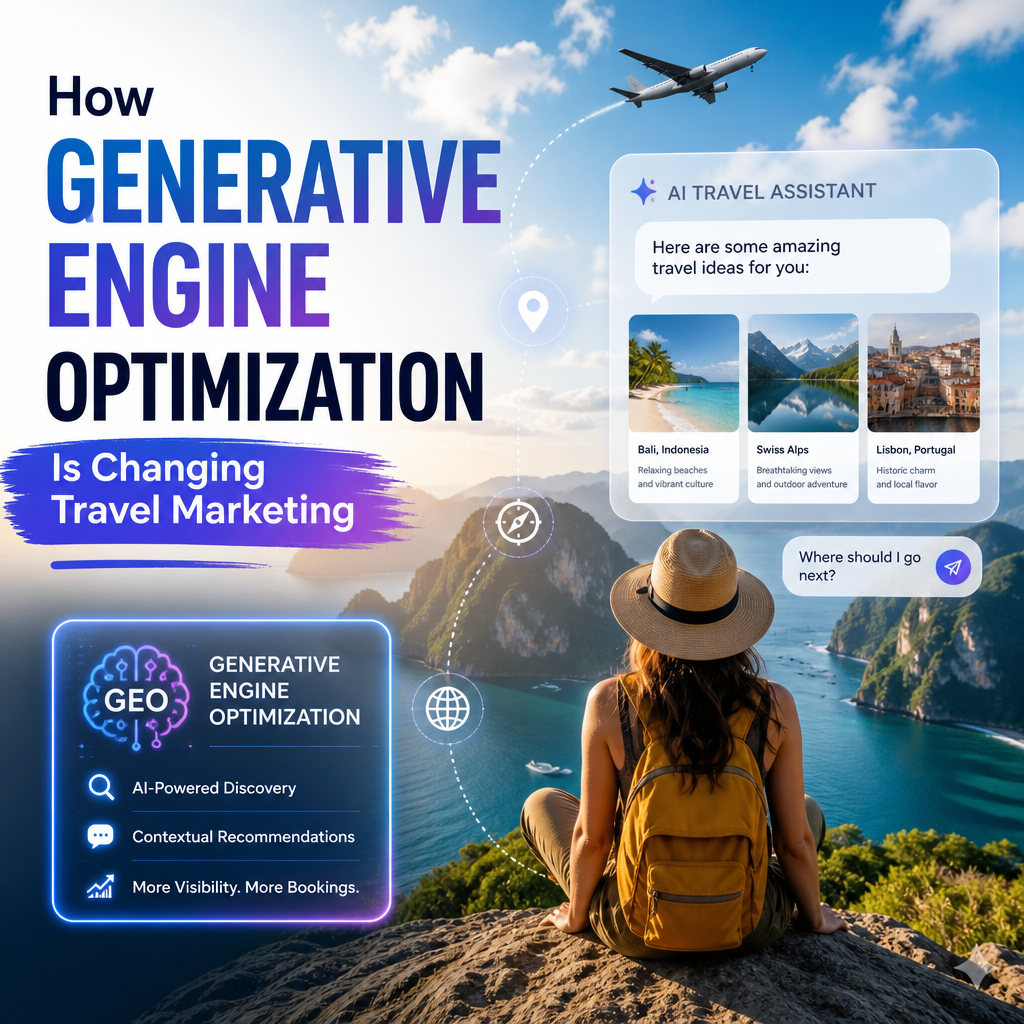
How Generative Engine Optimization Is Changing Travel Marketing
How Generative Engine Optimization Is Changing Travel Marketing
Travel marketing is entering a new era. Search engines are no longer the only tools travelers use to discover destinations, compare hotels, or plan itineraries. Increasingly, people are asking generative AI platforms for direct recommendations, complete travel plans, and personalized advice.
This shift has created a new digital marketing discipline: Generative Engine Optimization (GEO). While traditional search engine optimization focuses on ranking web pages in search results, GEO helps brands become visible and useful within AI-generated answers.
For travel companies, this change is already influencing how destinations, hotels, airlines, tour operators, and travel agencies attract potential customers.
What Is Generative Engine Optimization?
Generative Engine Optimization is the process of creating and structuring online content so that artificial intelligence systems can understand, trust, and reference it.
When a traveler asks an AI tool, “What are the best family-friendly hotels in Barcelona?” the platform may provide a summarized answer instead of a list of blue links. The recommendations are based on information gathered from websites, reviews, travel guides, booking platforms, and other online sources.
GEO aims to improve the likelihood that a travel brand will be included in these responses. It combines many familiar marketing practices, including:
- Clear and accurate website content
- Strong brand authority
- Positive customer reviews
- Consistent business information
- Expert recommendations and mentions
- Structured data and accessible page formats
The goal is not simply to rank highly. It is to become a trusted source that AI systems can confidently use.
Why GEO Matters for Travel Brands
Travel decisions are highly personal and often complex. Travelers may ask AI tools to recommend destinations based on budget, season, interests, accessibility needs, or family requirements.
These detailed questions create opportunities for travel brands to appear in highly relevant conversations. A hotel that publishes useful information about local attractions, transportation, neighborhood safety, and accessibility may be more likely to be recognized as a valuable source than one that only promotes room rates.
Generative AI also changes the customer journey. Instead of visiting several websites to compare options, travelers may receive a short list of recommendations in seconds. Brands included in those answers can gain visibility early in the planning process, while companies that are overlooked may lose potential bookings before a traveler reaches a traditional search page.
Creating Content AI Can Understand
Effective GEO begins with helpful, specific content. Travel brands should focus on answering the questions their audiences actually ask.
For example, instead of publishing a generic page titled “Visit Our Hotel,” a property could create content such as:
- Best things to do near the hotel in a weekend
- How to reach the property from the airport
- Family-friendly attractions within walking distance
- A three-day itinerary for first-time visitors
- Accessible travel information for guests with mobility needs
Content should be organized with descriptive headings, concise paragraphs, lists, tables, and clear factual details. This makes it easier for both travelers and AI systems to interpret.
Travel websites should also maintain updated information. Incorrect opening hours, outdated transportation details, or inaccurate pricing can reduce customer trust and make content less useful to generative platforms.
Building Trust Through Experience and Authority
AI systems look for signals that indicate whether information is credible. Travel brands can strengthen these signals by demonstrating real-world expertise.
Useful approaches include:
- Publishing expert destination guides
- Featuring local writers or travel professionals
- Sharing original photography and first-hand insights
- Earning coverage from reputable travel publications
- Collecting genuine customer reviews
- Maintaining accurate profiles across travel directories
Reviews are especially important because they reveal real experiences. Detailed reviews that mention service quality, location, cleanliness, amenities, and specific traveler needs can help reinforce a brand’s relevance for particular searches.
Partnerships with tourism boards, local businesses, and respected travel organizations can also increase credibility and create authoritative references across the web.
Personalization Is Becoming Essential
Generative AI makes travel planning more conversational and personalized. Travelers no longer need to use short keywords such as “Paris hotels.” They can ask for “a quiet, affordable hotel in Paris near museums, with breakfast and easy train access.”
Travel marketers should prepare for these longer, more natural questions by creating content around different traveler profiles and use cases. Pages can address couples, families, solo travelers, business visitors, luxury guests, and budget-conscious tourists.
The more precisely a brand addresses a traveler’s needs, the more opportunities it has to appear in relevant AI-generated recommendations.
The Future of Travel Marketing
Generative Engine Optimization will not replace traditional SEO, social media, email marketing, or online advertising. Instead, it adds another layer to an increasingly competitive digital landscape.
Travel brands that succeed will focus on being genuinely useful, trustworthy, and easy to understand. They will create content that answers real questions, support claims with reliable information, and deliver experiences that encourage positive reviews and recommendations.
As travelers increasingly rely on AI for inspiration and planning, visibility will depend on more than keyword rankings. Brands must become credible sources within the conversations that shape travel decisions. That is the central promise—and challenge—of Generative Engine Optimization.