

How Locals Discover Events Before Tourists Do
How Locals Discover Events Before Tourists Do
Tourists often find events through major travel websites, hotel recommendations, and popular social media posts. Locals, however, usually hear about what is happening much earlier. They rely on personal connections, neighborhood habits, and information channels that are easy for visitors to overlook.
Learning how locals discover events before tourists do can help travelers experience a destination more naturally—and sometimes avoid the biggest crowds.
They Follow Neighborhood Social Media
Local events are frequently promoted in neighborhood-based Facebook groups, community pages, and private messaging channels. These spaces may share information about:
- Street festivals
- Pop-up markets
- Live music
- Art exhibitions
- Food events
- Community meetings
- Seasonal celebrations
Unlike large tourism accounts, neighborhood groups often post about smaller events that never appear in international travel guides. A local may learn about a weekend concert, independent film screening, or temporary food stall days before it becomes widely known.
Instagram is also useful, particularly when following local venues, artists, cafés, and cultural organizations. Event details are often announced through Stories, short videos, or informal posts rather than permanent listings.
They Read Local News and Community Calendars
City newspapers, radio stations, cultural magazines, and local newsletters remain valuable sources of event information. These outlets often cover upcoming activities that appeal primarily to residents.
Community calendars can be especially helpful. Libraries, universities, museums, town halls, and arts organizations commonly maintain online schedules filled with lectures, workshops, performances, and exhibitions.
These events may not attract large tourist crowds, but they often provide a more authentic understanding of local interests and traditions.
Check Smaller Publications
Large travel websites tend to highlight famous attractions and established festivals. Smaller publications may focus on emerging artists, independent businesses, and neighborhood projects.
Look for:
- Local blogs
- Independent newspapers
- University publications
- City cultural websites
- Regional radio websites
- Nonprofit newsletters
Subscribing to one or two local newsletters before arriving can reveal events that are difficult to find through standard searches.
They Ask People Who Live There
Personal recommendations remain one of the fastest ways locals discover events. Residents share information with friends, colleagues, family members, and neighbors. A casual conversation can uncover a weekend event that is not heavily advertised online.
Travelers can use the same approach by speaking with:
- Baristas
- Bartenders
- Bookshop employees
- Market vendors
- Museum staff
- Hotel workers
- Local tour guides
Instead of asking only, “What should I see?” try asking, “What are people looking forward to this week?” This wording often leads to more current and less predictable suggestions.
They Follow Venues, Not Just Events
Many locals keep track of favorite venues rather than searching for events individually. A small music club, independent cinema, community theater, or gallery may host something new every week.
Once you find a venue that matches your interests, check its:
- Website
- Social media accounts
- Email newsletter
- Online ticket page
- Physical noticeboard
Venues often announce schedules to their regular audiences first. By following them directly, you can discover events before they appear on broader city listings.
They Notice Physical Advertising
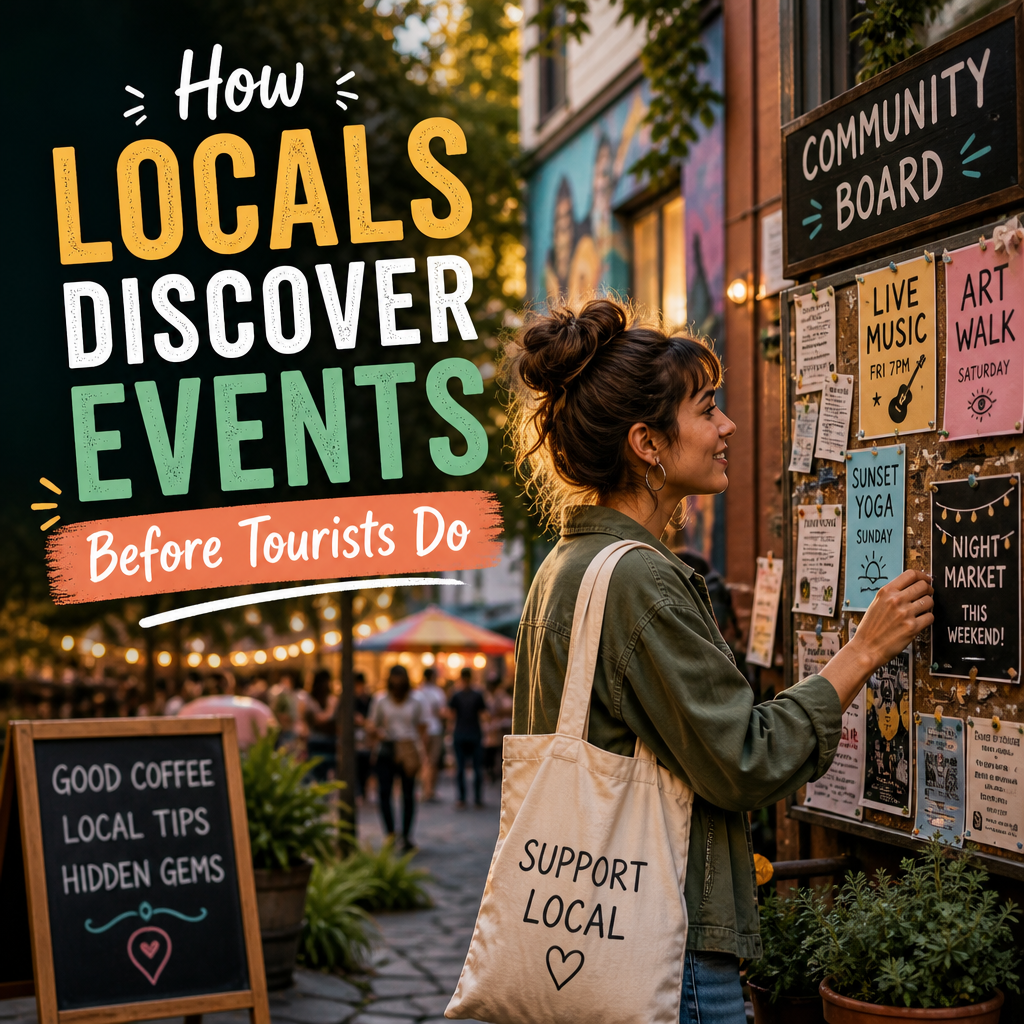
Posters, flyers, window displays, and public noticeboards remain important parts of local event culture. These forms of advertising are particularly common for concerts, theater performances, workshops, craft markets, and community gatherings.
Pay attention while walking through cafés, bookstores, transit stations, universities, and cultural districts. A simple poster may provide information about an event that has little online visibility.
Physical advertising can also reveal where local activity is concentrated. Several posters in one neighborhood may indicate an upcoming cultural weekend or a thriving independent arts scene.
They Use Local Messaging Apps
In some cities, residents depend heavily on messaging platforms to share event details. WhatsApp groups, Telegram channels, and neighborhood apps may circulate invitations, schedule changes, and last-minute announcements.
These groups can be difficult for visitors to access, but local contacts, hosts, and community organizations may be able to point you toward public channels. Some event organizers also use messaging apps to announce limited-capacity gatherings or changes caused by weather.
They Look Beyond the Main Tourist Districts
Tourists usually search for events near famous landmarks and central hotels. Locals often look in residential neighborhoods, converted industrial areas, university districts, and suburban cultural centers.
Exploring these areas can lead to smaller crowds and more distinctive experiences. You may find a neighborhood food fair, an outdoor film night, or a local performance that reflects the character of the community.
The key is to search by neighborhood rather than by city alone. Try combining a district name with terms such as “events,” “what’s on,” “market,” “concert,” or “this weekend.”
A More Authentic Way to Explore
Locals discover events through relationships, routines, and trusted community sources. Travelers can follow the same path by reading local publications, monitoring venues, asking residents, and paying attention to the places they visit.
The result is more than a better event calendar. It is a chance to experience a destination as its residents do—through ordinary gathering places, emerging activities, and celebrations that have not yet become tourist attractions.
