

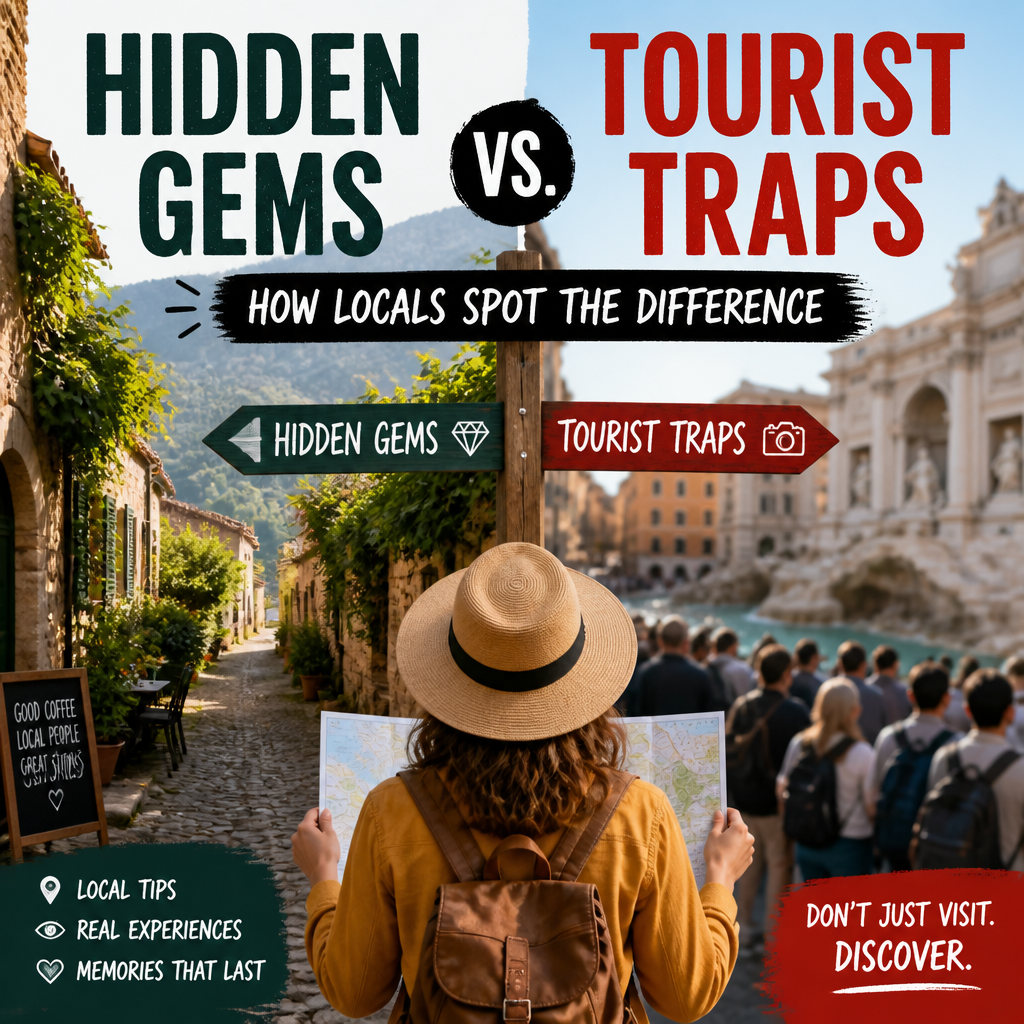
Hidden Gems vs. Tourist Traps: How Locals Spot the Difference
Hidden Gems vs. Tourist Traps: How Locals Know the Difference
Travel guides often highlight famous landmarks, popular restaurants, and must-see attractions. While these places can be worth visiting, they do not always offer the most authentic or memorable experiences. Locals usually know that the best parts of a destination are often found away from the busiest streets.
The difference between hidden gems and tourist traps is not always obvious. Both can look appealing online, attract crowds, and appear on travel lists. However, with a little observation and local knowledge, travelers can learn to tell them apart.
What Makes a Hidden Gem?
A hidden gem is a place that offers genuine value, character, or beauty without depending entirely on mass tourism. It may be a small family-run restaurant, a quiet neighborhood park, an independent bookstore, or a lesser-known viewpoint.
Hidden gems often have a few qualities in common:
- They attract a mix of local residents and visitors.
- Their reputation grows through word of mouth.
- The experience feels personal rather than highly commercialized.
- Prices are usually reasonable for the area.
- The business or attraction has a clear connection to the local community.
A hidden gem does not have to be completely unknown. Some popular places remain authentic even after receiving attention. The key is whether the experience still feels meaningful and fairly priced.
What Defines a Tourist Trap?
A tourist trap is designed primarily to take advantage of visitors. It may offer an overpriced meal, an underwhelming attraction, or a collection of souvenirs with little connection to local culture.
Not every busy attraction is a tourist trap. Major landmarks can be crowded and still deserve a visit. Problems arise when marketing promises an exceptional experience that does not match reality.
Common warning signs include:
- Menus translated into many languages but lacking local specialties
- Aggressive staff inviting people inside
- Prices that are difficult to find or intentionally unclear
- Souvenir shops selling identical products throughout the city
- Large crowds with almost no local residents
- Online reviews that repeatedly mention poor value
- Photos that look dramatically better than the real experience
Tourist traps often rely on convenience. They are located near major attractions, transportation hubs, or cruise ports, where travelers may stop without researching alternatives.
How Locals Spot the Difference
Locals pay attention to details that visitors may overlook. One of the clearest clues is who actually uses a place. A café filled with office workers, families, or students is more likely to provide a genuine local experience than one filled exclusively with tour groups.
Timing also matters. Restaurants that serve a strong lunch crowd or become busy before typical tourist hours may be popular with residents. Conversely, a restaurant surrounded by promoters and empty tables may deserve closer inspection.
Locals also consider consistency. A genuine business usually has a stable reputation built over time. It may not have perfect reviews, but customers often mention specific dishes, friendly service, or a welcoming atmosphere. Tourist traps tend to receive vague praise, exaggerated claims, or repeated complaints about pricing.
Research Beyond the First Search Result
Search engines and travel platforms can be useful, but the most visible results are not always the best. Businesses may rank highly because of advertising, location, or popularity rather than quality.
Before visiting, look for:
- Reviews written by residents or repeat visitors
- Recent comments about prices and service
- Recommendations from local newspapers or community websites
- Social media accounts showing ordinary daily activity
- Menus with clear prices and locally relevant dishes
Local food writers, independent bloggers, and neighborhood groups can provide more reliable information than generic “top ten” lists.
Ask Better Questions
When asking for recommendations, avoid broad questions such as, “Where should I eat?” Instead, ask specific questions that encourage personal answers:
- Where would you go for a casual meal?
- What place do visitors often miss?
- Which neighborhood do you enjoy spending time in?
- Where can I try a traditional dish without paying a premium?
- What attraction is popular but not worth the cost?
Hotel staff, market vendors, bookstore employees, and taxi drivers may offer useful suggestions, especially when asked about their own preferences rather than the city’s most famous attractions.
Leave Room for Discovery
The best travel experiences are not always carefully planned. Walking a few blocks away from a major landmark, exploring a residential neighborhood, or stopping at a busy local bakery can reveal places that never appear in guidebooks.
Still, hidden gems should be approached respectfully. Avoid treating residential areas like entertainment zones, follow local rules, and support small businesses fairly. Authentic travel is not about finding a secret place before everyone else. It is about connecting with a destination in a thoughtful way.
Tourist traps may occasionally be fun, and famous attractions can be unforgettable. The goal is not to avoid anything popular. Instead, combine iconic sights with independent discoveries, pay attention to value, and observe where locals choose to spend their time. That balance often leads to a richer, more authentic journey.
