

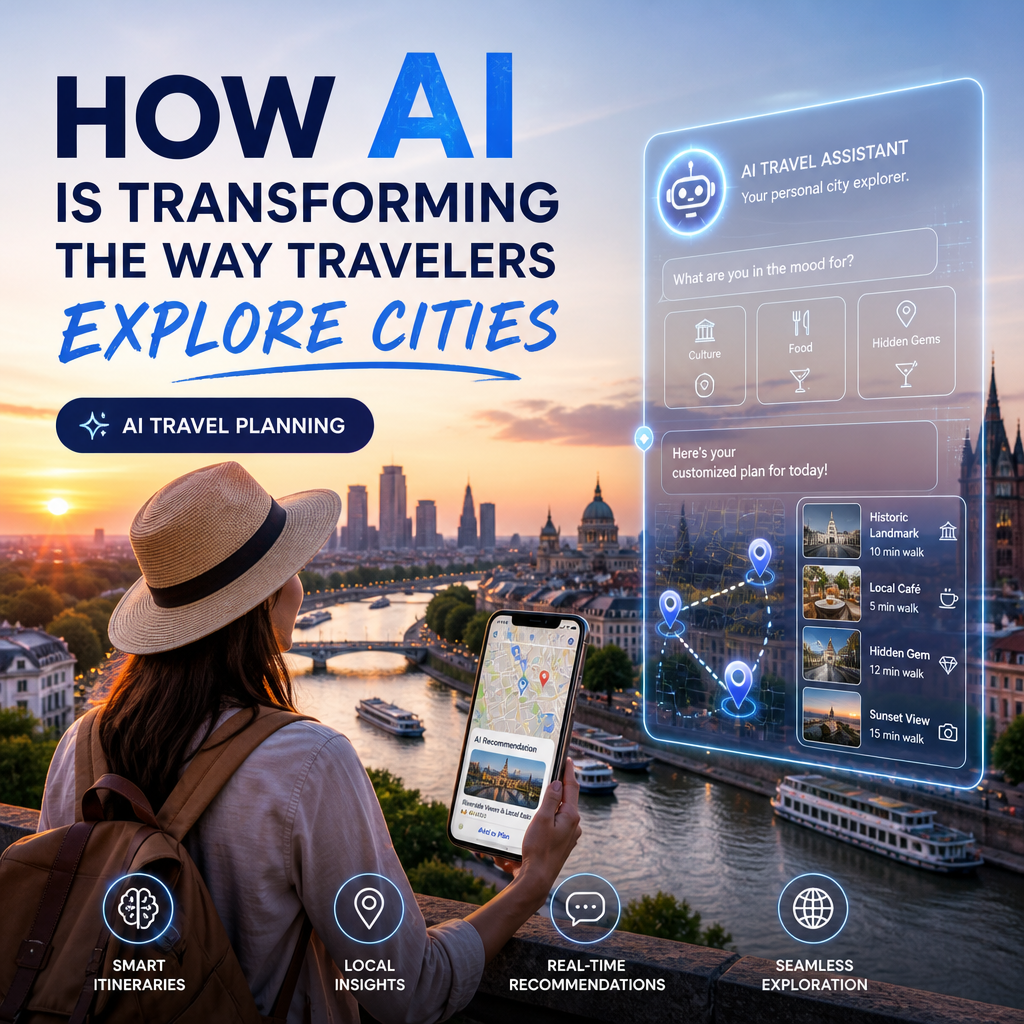
How AI Is Transforming the Way Travelers Explore Cities
How AI Is Transforming the Way Travelers Explore Cities
Exploring a new city has always involved a mix of curiosity, planning, and spontaneity. Travelers once relied on guidebooks, printed maps, and recommendations from hotel staff. Today, artificial intelligence is changing that experience by making urban adventures more personalized, efficient, and interactive.
From creating custom itineraries to translating conversations in real time, AI is helping visitors discover cities in ways that suit their interests, schedules, and travel styles.
Personalized Itineraries in Seconds
One of the most noticeable ways AI is transforming city exploration is through personalized trip planning. Instead of searching through dozens of websites, travelers can use AI-powered tools to build an itinerary based on specific preferences.
A traveler might request:
- A two-day walking tour focused on architecture
- Family-friendly attractions near a hotel
- Affordable local restaurants away from tourist areas
- A rainy-day schedule featuring museums and cafés
- An evening itinerary centered on music and nightlife
AI can consider factors such as location, opening hours, transportation times, weather, budget, and personal interests. This makes planning faster while also helping travelers fit more meaningful experiences into limited time.
Discovering Hidden Neighborhoods
Traditional travel guides often focus on famous landmarks. While these attractions are worth visiting, they may not show the everyday character of a city. AI can help travelers look beyond the most popular tourist destinations.
By analyzing local reviews, event listings, social media discussions, and neighborhood data, AI tools can suggest lesser-known galleries, independent bookstores, food markets, parks, and community events. These recommendations can introduce visitors to places they might never find through a standard search.
This does not mean AI replaces local knowledge. Instead, it can act as a starting point, helping travelers identify areas to explore and then encouraging them to engage with the city more deeply.
Real-Time Navigation and Adaptable Plans
City exploration rarely goes exactly according to plan. A restaurant may be closed, public transportation may be delayed, or sudden rain may change the day’s activities. AI-powered travel apps can respond to these changes quickly.
Navigation tools can recommend alternative routes based on traffic, transit disruptions, walking conditions, and crowd levels. Some systems can also adjust an itinerary automatically when a traveler spends more time at one attraction than expected.
This flexibility allows visitors to enjoy a city without constantly worrying about schedules. Instead of treating an itinerary as a fixed checklist, travelers can use it as a dynamic guide that changes with their circumstances.
Breaking Down Language Barriers
Language can be one of the most rewarding parts of international travel, but it can also create challenges. AI translation tools are making communication easier through instant text, voice, and image translation.
Travelers can use their phones to:
- Translate menus and street signs
- Ask for directions
- Communicate with taxi drivers
- Read public notices
- Hold simple conversations with residents
More advanced tools can recognize context and conversational tone, producing translations that sound more natural. Although technology cannot replace learning local phrases or understanding cultural customs, it gives travelers greater confidence when navigating unfamiliar environments.
More Accessible City Experiences
AI is also improving travel accessibility. Travelers with mobility, visual, or hearing needs can use AI-powered tools to find suitable attractions, routes, and transportation options.
For example, an app may identify step-free entrances, elevators, accessible restrooms, quieter visiting hours, or routes with fewer obstacles. Image-recognition technology can describe surroundings for travelers with visual impairments, while automatic captions can support visitors who are deaf or hard of hearing.
As cities and travel companies collect better accessibility data, AI may help make urban exploration more inclusive for a wider range of people.
Making Travel More Responsible
AI can support more sustainable travel choices by helping visitors understand the environmental impact of their decisions. It can suggest public transportation, walking routes, bike-sharing options, and locally owned businesses.
Some tools can also recommend less crowded attractions or alternative visiting times. This may reduce pressure on heavily visited landmarks and distribute tourism benefits across more neighborhoods.
However, responsible use matters. Travelers should avoid treating algorithmic recommendations as the only source of truth. Supporting local businesses, respecting residential areas, and following cultural guidelines remain essential.
The Human Element Still Matters
AI can make city exploration more convenient, but it does not replace curiosity or human connection. The most memorable travel experiences often come from unexpected discoveries: a conversation with a shop owner, a street performance, or a meal recommended by someone nearby.
The best use of AI is as a helpful companion rather than a complete substitute for exploration. It can handle research, navigation, and translation while leaving travelers free to observe, interact, and make their own decisions.
As the technology develops, AI will continue reshaping the way people experience cities. Used thoughtfully, it can help travelers explore more confidently, discover places beyond the usual tourist paths, and create richer connections with the destinations they visit.
