

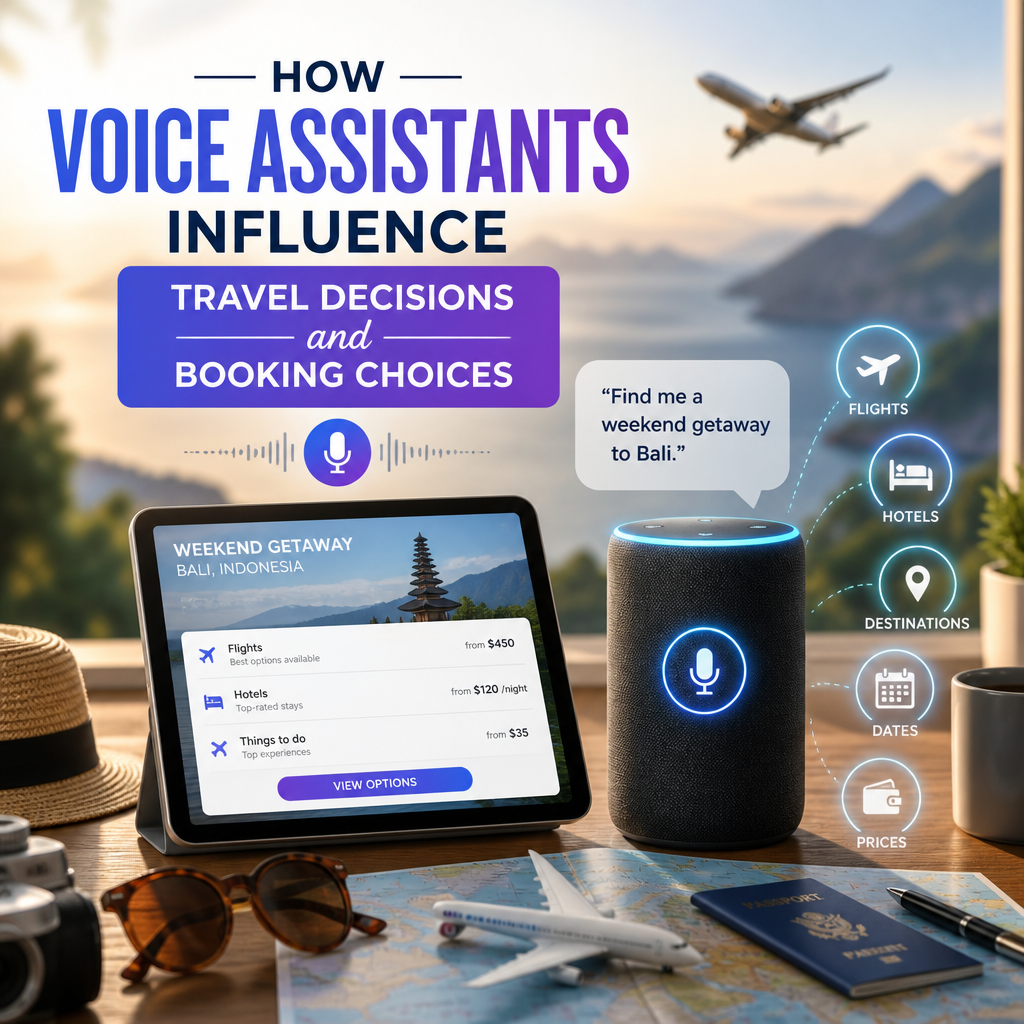
How Voice Assistants Influence Travel Decisions and Booking Choices
How Voice Assistants Influence Travel Decisions
Travel planning has become faster and more conversational thanks to voice assistants. Instead of typing searches into a browser, travelers can ask questions aloud and receive immediate recommendations about destinations, flights, hotels, restaurants, and activities.
From smartphones and smart speakers to in-car systems, voice technology is changing how people discover and organize trips. Its influence begins with inspiration and continues through booking, navigation, and the travel experience itself.
From Search Queries to Conversations
Traditional travel research often involves comparing dozens of websites, reading reviews, and opening multiple browser tabs. Voice assistants simplify this process by allowing users to ask natural questions such as:
- “What are the best weekend destinations near me?”
- “When is the cheapest time to visit Rome?”
- “Find a family-friendly hotel in Edinburgh.”
- “What should I do in Tokyo tomorrow?”
These conversational searches make travel planning feel more accessible. Users do not need to know the exact keywords or website to use. They can describe what they want in ordinary language, and voice assistants attempt to interpret the request.
This is especially useful for travelers who are still exploring ideas rather than searching for one specific product. A question about warm destinations in winter, for example, may introduce travelers to places they had not previously considered.
Personalized Recommendations Shape Choices
Voice assistants can use information such as location, search history, calendar details, and stated preferences to provide more personalized suggestions. A traveler who regularly searches for budget accommodation may receive recommendations that prioritize affordability. Someone who asks about accessible attractions may see options that meet mobility requirements.
Personalization can save time, but it also influences decisions by narrowing the range of choices presented. When a voice assistant recommends only a few hotels, flights, or attractions, those options may receive more attention than alternatives that are not mentioned.
This creates a new form of digital visibility. Travel businesses that provide accurate information, maintain strong reviews, and use clear online descriptions are more likely to be recognized by voice-driven systems.
Convenience Encourages Faster Bookings
Voice assistants reduce friction at several stages of the travel journey. Travelers can check flight times while cooking, compare hotel prices while commuting, or add a restaurant reservation to their schedule without stopping to type.
This convenience can also lead to quicker decisions. When an assistant offers a direct answer or a small selection of relevant options, users may feel less need to conduct additional research. Simple booking processes, saved payment details, and voice-enabled confirmations make spontaneous travel purchases easier.
However, convenience does not always mean better decisions. Travelers may need to verify cancellation policies, baggage fees, resort charges, and review quality before completing a purchase. Voice results often summarize information, so important details can be overlooked.
Voice Search Influences Destination Discovery
Voice assistants are becoming an important source of local travel information. Once visitors arrive at a destination, they can ask for nearby attractions, public transportation directions, opening hours, or highly rated restaurants.
These location-based recommendations can spread visitor traffic beyond traditional tourist sites. A traveler may discover a neighborhood café, independent shop, or lesser-known museum because it appears in response to a spoken question.
At the same time, repeated recommendations may concentrate visitors in the same places. Popular attractions can become even more crowded when voice assistants consistently rank them highly. Travelers who want a quieter experience may benefit from asking more specific questions, such as requests for alternatives to crowded landmarks or activities favored by local residents.
Accessibility and Hands-Free Travel
One of the most valuable effects of voice assistants is improved accessibility. People with visual impairments, limited mobility, or difficulty using touchscreens can interact with travel services more easily through speech.
Voice technology is also useful in situations where hands-free access matters. Drivers can request directions, travelers can translate phrases while carrying luggage, and visitors can check schedules without handling a phone in unfamiliar surroundings.
For voice assistants to serve travelers effectively, responses must be accurate, concise, and easy to understand. They should also support different accents, languages, speech patterns, and communication needs.
The Future of Voice-Driven Travel
As voice assistants become more integrated with booking platforms, transportation networks, and hotel systems, their influence is likely to grow. Travelers may be able to plan complete itineraries through a conversation, receive real-time disruption alerts, and adjust reservations with simple spoken commands.
Travel companies can prepare by creating clear, trustworthy, and up-to-date digital content. Detailed answers to common questions, accurate business listings, natural language, and strong customer reviews can improve visibility in voice search.
Ultimately, voice assistants do more than make travel planning convenient. They shape which destinations people notice, which businesses they consider, and how quickly they make decisions. For travelers, the best approach is to combine the speed of voice recommendations with thoughtful research and independent judgment.
