

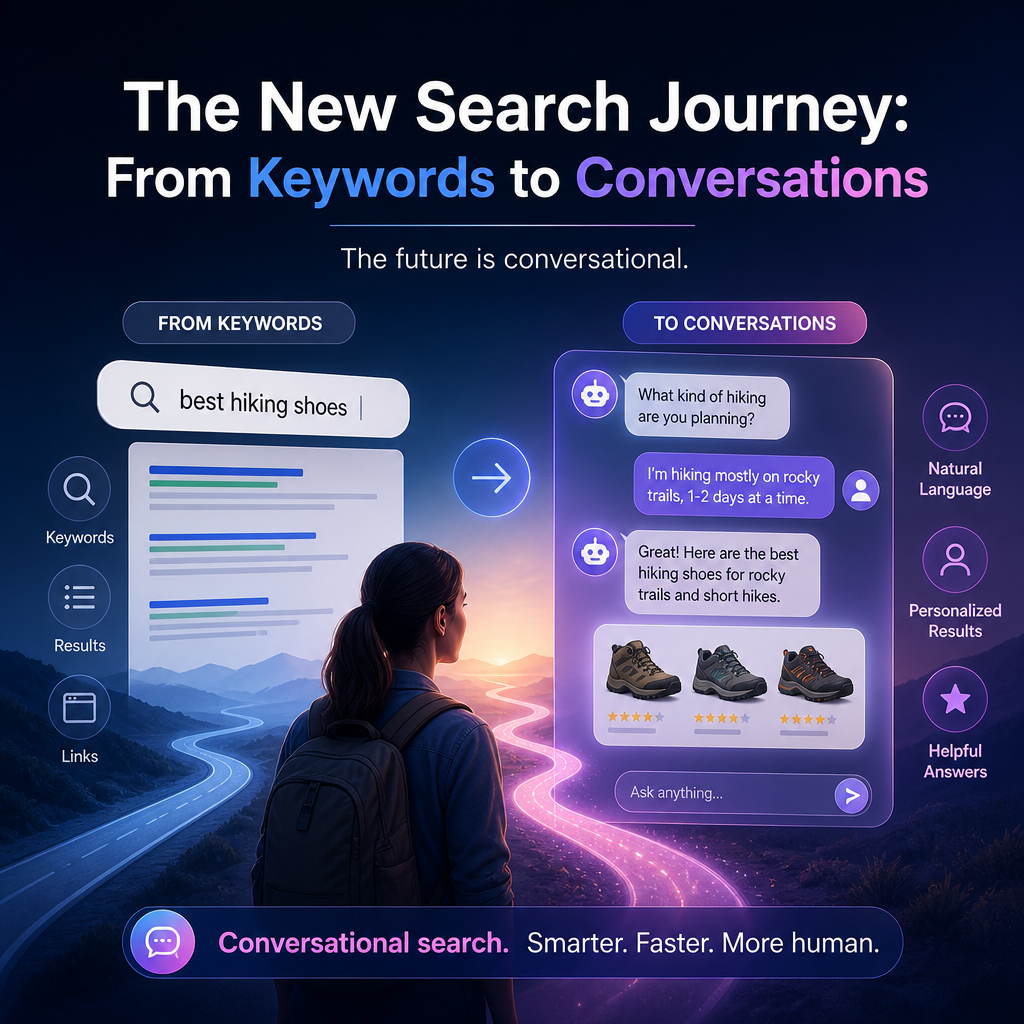
The New Search Journey: From Keywords to Conversations
The New Search Journey: From Keywords to Conversations
Search is changing from a simple exchange of keywords and links into a more natural, conversational experience. People no longer have to carefully choose short phrases to find useful information. Instead, they can ask complete questions, explain their needs, and refine the conversation as they go.
This shift is changing how people discover content, products, services, and ideas online. It is also challenging businesses to rethink how they create and optimize their digital presence.
From Search Terms to Real Questions
Traditional search often begins with a few words, such as “best running shoes” or “Italian restaurants nearby.” These keywords are useful, but they do not always reveal the searcher’s full intention.
A conversational search might sound more like:
“What are the best running shoes for someone training for a half marathon with flat feet?”
This question includes context, preferences, and a specific goal. Modern search tools are increasingly capable of understanding these details and producing a response that addresses the broader intent rather than matching only individual words.
The result is a more helpful search journey. Users can begin with a general question, ask follow-ups, compare options, and request clarification without starting over each time.
Why Conversational Search Matters
The move toward conversation is being driven by several changes in technology and user behavior.
1. Natural language is easier
People generally think in questions and ideas, not keyword combinations. Conversational search allows them to describe what they need in the same way they would speak to another person.
2. Context improves relevance
A search system that understands previous questions can provide more personalized answers. For example, someone researching a family vacation can move from destinations to budgets, activities, and accommodation without repeating the original details.
3. Complex decisions become simpler
Many searches involve research rather than a single fact. Buying a laptop, choosing a software platform, or planning a trip may require multiple steps. Conversational tools can help organize those decisions and explain the differences between options.
What This Means for Content Creators
Content still matters, but the way it is created must evolve. A page built around one exact keyword may not satisfy users who have broader, more detailed questions.
Strong content should address:
- The main topic and related questions
- Different levels of audience knowledge
- Practical examples and clear explanations
- Common concerns and objections
- Comparisons, recommendations, and next steps
Instead of writing only for a search phrase, creators should write for the complete journey behind that phrase. What is the reader trying to accomplish? What information will they need next? Which questions might naturally follow?
This approach creates content that is more useful to people and easier for search systems to understand.
Building Content for the Search Journey
A conversational content strategy begins with user intent. Before choosing a headline or keyword, consider the reason someone is searching.
Are they:
- Learning about a topic?
- Comparing possible solutions?
- Looking for a specific product?
- Trying to solve a problem?
- Ready to take action?
Once the intent is clear, organize the content around the questions a reader is likely to ask. Use descriptive headings, short paragraphs, straightforward language, and supporting examples.
It is also helpful to include direct answers near the beginning of each section. Readers often want quick clarity, while detailed explanations can provide additional value for those who need more depth.
The Importance of Trust and Original Insight
As conversational search becomes more common, trustworthy content will become even more important. Users need answers that are accurate, transparent, and grounded in genuine expertise.
Businesses can strengthen trust by:
- Citing reliable sources
- Including first-hand experience
- Explaining limitations
- Keeping information current
- Avoiding exaggerated claims
- Showing how recommendations were reached
Generic content may answer a basic question, but original insights help a brand stand out. Case studies, expert commentary, research, and practical examples give readers reasons to believe and return.
A More Human Future for Search
The new search journey is not simply about replacing keywords. Keywords remain useful signals, but they are now part of a larger conversation about intent, context, and outcomes.
For businesses and content creators, the opportunity is clear: create resources that answer real questions and support people through every stage of decision-making. The most successful content will not merely attract a click. It will help users understand, compare, decide, and act.
Search is becoming more human because people are asking for more than links. They are looking for useful conversations, meaningful context, and confident guidance.
