

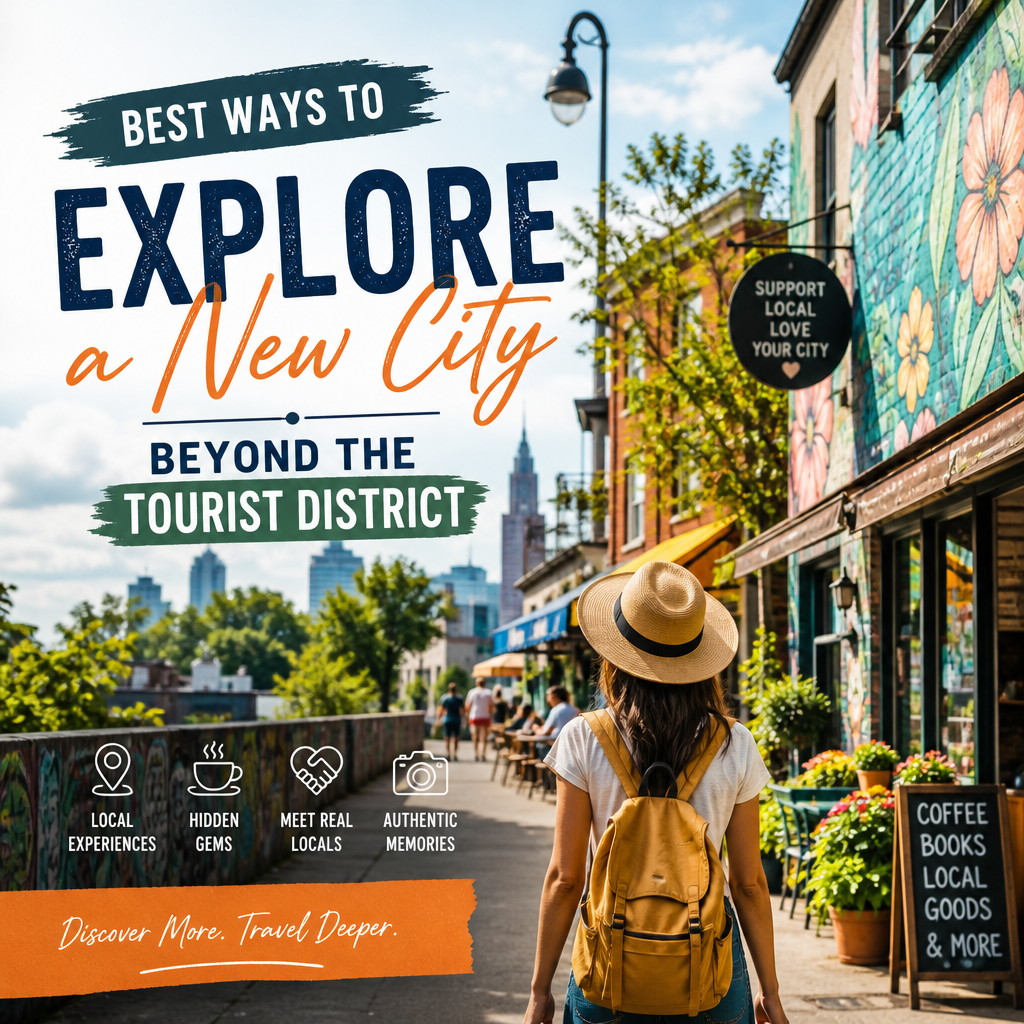
Best Ways to Explore a New City Beyond the Tourist District
Best Ways to Explore a New City Beyond the Tourist District
Traveling to a new city is exciting, but the most memorable experiences often happen away from famous landmarks and crowded attractions. Once you step beyond the tourist district, you can discover local traditions, neighborhood cafés, independent shops, and everyday places that reveal what life is really like.
Exploring beyond the usual sightseeing route does not require an elaborate plan. A little curiosity, flexibility, and willingness to slow down can lead to a more authentic travel experience.
Wander Through Residential Neighborhoods
One of the simplest ways to understand a city is to walk through its residential areas. These neighborhoods often feature local bakeries, small parks, community gardens, schools, and family-owned businesses that rarely appear in standard travel guides.
Pay attention to the details:
- Architectural styles and building materials
- Street art and public notice boards
- Local markets and corner stores
- Outdoor gathering places
- The way residents use public spaces
Choose a neighborhood that is easy to reach by public transportation, then spend a few hours walking without a strict itinerary. Stay respectful by keeping noise low, avoiding private property, and asking before photographing people or homes.
Eat Where Locals Eat
Restaurants near major attractions often cater to visitors, while neighborhood eateries serve the people who live nearby. Look for busy cafés, food halls, modest family-run restaurants, and takeaway counters filled with local customers.
Ask hotel staff, shop owners, or residents for recommendations. You can also search for places with menus written primarily in the local language, though you should be prepared to use a translation app when needed.
Trying regional dishes is an important part of understanding a city. Start with something familiar if you are cautious, then add one unfamiliar item to your order. Local food can reveal a place’s history, geography, and cultural influences more clearly than a museum label.
Visit Local Markets
Markets are excellent places to experience the rhythm of daily life. Farmers’ markets, flea markets, fish markets, and indoor food halls attract a wide range of residents and often offer a glimpse into local customs.
Arrive early to see vendors setting up and shoppers beginning their routines. Later in the day, markets may become more social and energetic. Bring cash if small vendors do not accept cards, and learn a few basic phrases for greeting people and asking prices.
Even when you do not buy anything, markets provide opportunities to observe seasonal ingredients, traditional crafts, and the way locals gather.
Use Public Transportation
Taxis and rideshare services are convenient, but public transportation can offer a closer look at a city’s everyday character. Buses, trams, trains, and ferries connect residential districts that visitors might otherwise miss.
Take a route to an area you have not planned to visit. Sit near a window, note interesting stops, and get off when something catches your attention. This approach can lead to unexpected discoveries, such as a riverside path, an independent bookstore, or a quiet neighborhood square.
Before traveling, check payment methods and transportation etiquette. Some cities require prepaid cards, while others allow contactless payment. Knowing the basics makes the experience more comfortable and less stressful.
Join a Local Activity
A workshop, walking group, community event, or recreational class can help you connect with people who live in the city. Consider joining activities such as:
- Cooking or craft workshops
- Local sports events
- Language exchanges
- Neighborhood walking tours
- Live music nights
- Volunteer projects
Choose an activity that encourages interaction rather than passive observation. A small group experience often creates more meaningful conversations than a large guided tour.
Spend Time in Parks and Public Spaces
Parks reveal how residents relax, exercise, socialize, and spend time with family. Look beyond the city’s most famous gardens and visit smaller green spaces, waterfront paths, or public plazas.
Bring a book, coffee, or snack and stay for a while instead of simply passing through. Observe how the space changes throughout the day. Morning may bring joggers and dog walkers, while evenings can attract families, musicians, or informal sports groups.
Learn From Independent Shops
Independent bookstores, record stores, galleries, antique shops, and design studios often reflect a city’s creative identity. Owners and staff may be happy to explain the history of a neighborhood or recommend other places nearby.
Shopping locally also supports small businesses and can lead to more distinctive souvenirs. Choose items that are useful, handmade, or connected to the area rather than mass-produced products found everywhere.
Embrace Unplanned Discoveries
The best way to explore beyond the tourist district is to leave room for spontaneity. Do not fill every hour with reservations and scheduled attractions. Allow yourself time to turn down an unfamiliar street, follow the sound of music, or return to a place that interests you.
Traveling this way may not produce the most photographs or checkmarks on a sightseeing list, but it often creates stronger memories. By walking slowly, eating locally, using public transportation, and engaging with everyday life, you can experience a new city as more than a collection of attractions—you can begin to understand it as a living community.
